Tesla and SpaceX eye a $3.45 trillion merger
 AI image
In short
- Tesla and SpaceX are officially evaluating a possible combination, but no agreement has been reached.
- Reuters puts their combined market value at approximately $3.45 trillion.
- Tesla shareholders could receive shares in the combined company, depending on the agreed exchange ratio.
- Analysts have discussed premiums ranging from 0 to 35 percent, but these are scenarios rather than agreed terms.
On November 12, 2026, discussions between Tesla and SpaceX moved forward again. Reuters reported that the companies are working towards a possible announcement in December, although the timeline could slip into early 2027. Based on their latest reported market values, the two businesses are worth approximately $3.45 trillion combined. For shareholders, one question matters most: how much of the new company would they actually own?
The merger discussions are now official
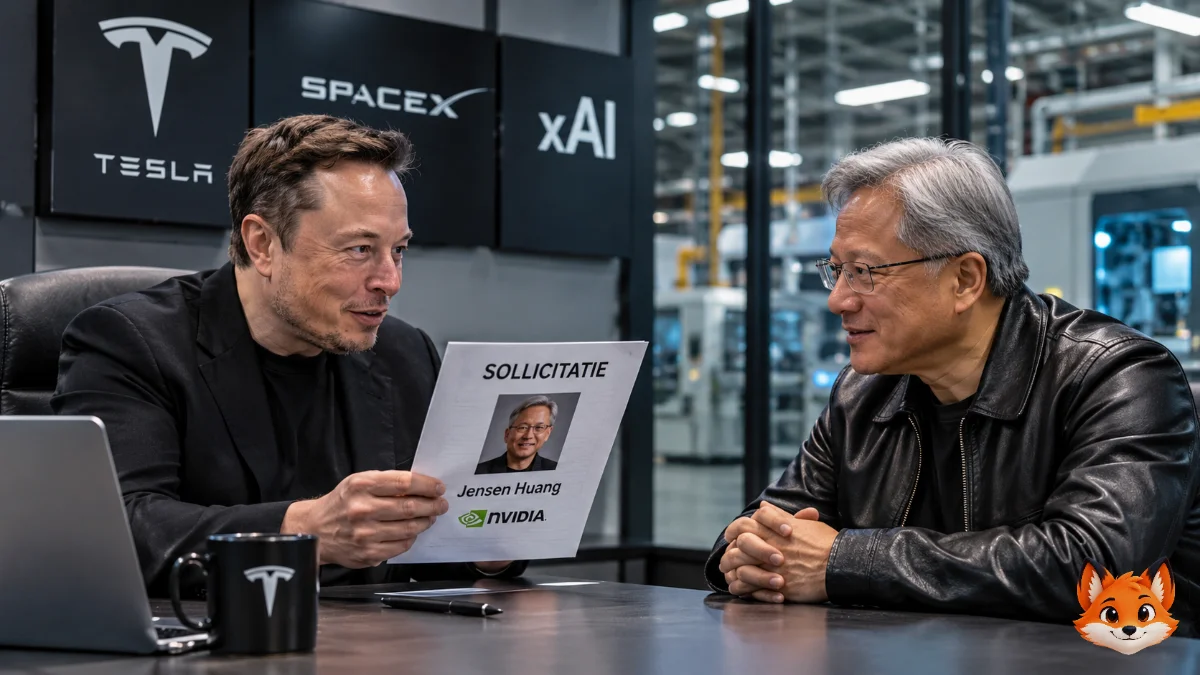
This is no longer just speculation on social media. SpaceX confirmed in its official quarterly filing with the US Securities and Exchange Commission that a special committee is evaluating a potential combination with Tesla. Tesla has also formed its own committee of independent directors.
There is no agreement yet. SpaceX stated that no decision has been made. Any transaction would require approval from its special committee, its board and controlling shareholder Elon Musk.
On November 12, Reuters reported that discussions were progressing. An announcement in December is being considered, although early 2027 remains possible. That is not a confirmed merger date.
Two companies could become a $3.45 trillion business
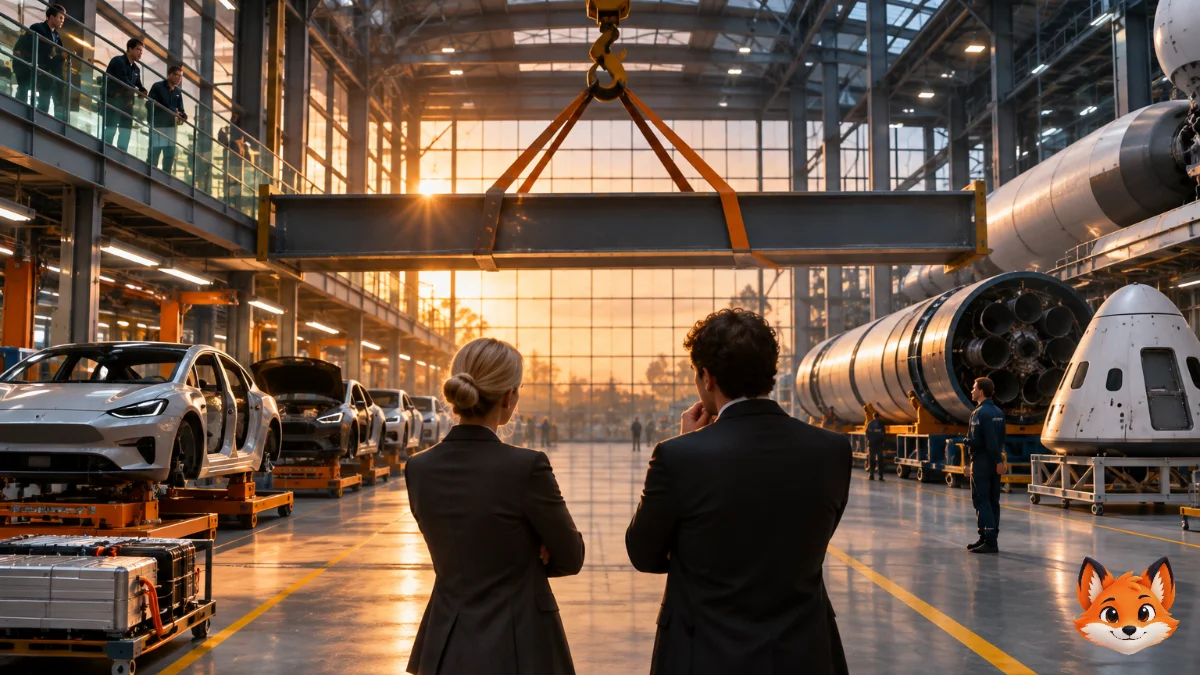
Tesla and SpaceX operate in different markets. Tesla earns revenue from electric vehicles, energy storage and software. SpaceX builds rockets, launches satellites and sells internet access through Starlink. Both companies are also involved in artificial intelligence, chips and robotics.
According to Reuters, SpaceX had a market value of approximately $1.90 trillion at the latest reported close. Tesla was valued at around $1.55 trillion. Together, that adds up to approximately $3.45 trillion.
That figure is the sum of their current market values. It is not automatically the value of a newly merged company. Debt, newly issued shares, the transaction structure and the agreed purchase price would all affect the calculation.
The strategic appeal is clear. Tesla brings factories, batteries, vehicles and robotics. SpaceX contributes satellites, launch capacity and space technology. The businesses could share technology and infrastructure. Investors must also consider the enormous investment required to make those plans work.
TSLA would not simply disappear from your portfolio
A merger does not automatically make Tesla shares worthless, nor does it mean that one Tesla share will be exchanged for one SpaceX share. In an all stock transaction, shareholders usually receive shares in the new company according to a fixed exchange ratio.
Several structures are possible:
- SpaceX acquires Tesla and pays with its own shares.
- Both companies combine under a newly created holding company.
- Tesla acquires SpaceX, although this appears less likely given their current valuations.
In the first two scenarios, the TSLA ticker could eventually disappear or change. Existing Tesla shareholders would instead receive shares in the combined business. The exact result will only become clear when official transaction documents are published.
SpaceX has traded under the ticker SPCX since its public listing. Tesla remains TSLA for now. Until a formal transaction is completed, the legal ownership of existing shares remains unchanged.
The exchange ratio decides how many shares you receive
This is probably the most important issue for individual investors. Imagine SpaceX acquires Tesla and Tesla shareholders receive shares in return for their current holdings. The exchange ratio determines how many new shares they receive for each Tesla share.
Reuters reported in October that analysts were discussing different scenarios. The premium for Tesla shareholders ranged from 0 to 35 percent. A premium is the additional amount above the market value that a buyer offers to persuade shareholders to accept a deal.
In numbers: Imagine you own 10 Tesla shares and use a share price of $397.42 as the calculation basis. Your position is worth $3,974.20. With a hypothetical 15 percent premium, the takeover value would be $4,570.33. That is an additional $596.13. This is an illustrative calculation, not an announced offer.
On November 12, Barron's described an illustrative scenario in which SpaceX would need to issue approximately 3.2 of its own shares for every Tesla share at a 15 percent premium. That calculation depends on the share prices and valuations at the time. It is not an agreed exchange ratio.
| Scenario | Value of 10 Tesla shares |
|---|---|
| No premium | $3,974.20 |
| 15 percent premium | $4,570.33 |
| 35 percent premium | $5,365.17 |
These are gross values based on the stated calculation price. The final consideration could consist of a different number of shares, cash or a combination of both.
A higher premium means more dilution for SpaceX investors
A higher payment to Tesla shareholders sounds attractive. But those new shares have to come from somewhere. If SpaceX issues new shares to pay for Tesla, the total number of shares increases. This is called dilution.
Imagine SpaceX issues millions of new shares to complete the acquisition. Existing shareholders would then own a smaller percentage of the combined company. That is not automatically bad. If the merger creates a business worth more than the two companies separately, the value of their investment could still increase.
But there is a risk. A larger company is not automatically a better company. If the merger is expensive, projects fail or integration becomes difficult, the value per share could come under pressure.
Musk could gain more voting power
Control is another major issue. Reuters reported that Musk holds approximately 85 percent of SpaceX's voting power and around 20 percent of Tesla. Analysts estimate that his voting power in a combined company could rise to approximately 57 to 58 percent.
That would be a significant change. Musk would not only be the leading executive. He could also hold decisive influence over major company decisions.
This is why the independent committees matter. They must assess whether the proposed terms are fair to shareholders in both businesses. Musk has said he is not participating in the discussions because of his conflict of interest.
Regulators could still block the deal
A company combining cars, satellites, rockets, AI and defence contracts raises complicated questions. SpaceX works with US government agencies and operates strategic space infrastructure. Tesla has major commercial interests in China.
Reuters highlighted possible regulatory scrutiny because of this combination. US competition authorities may also examine the impact on competition. The US Department of Justice and Federal Trade Commission guidelines allow regulators to investigate mergers that could reduce competition.
An agreement between the boards is therefore not enough. Shareholders and regulators must also have their say. Tesla's annual shareholder meeting is scheduled for December 3, 2026, but that does not mean a merger will automatically be put to a vote at that meeting.
Watch out: TSLA and SPCX prices can move on expectations alone. On November 12, Tesla traded around $397 and SpaceX around $142 during the trading session. A market reaction does not prove that a merger will happen. If discussions collapse, a premium built into the share price could disappear.
Questions shareholders should ask
- Which company will legally acquire the other, and who receives new shares?
- How many new shares will be issued and how much dilution will result?
- What premium will Tesla shareholders receive, and how is it calculated?
- How much voting power will Musk have in the new company?
- Which investments and debts will become part of the combined business?
A merger could bring two major technology companies together. But the eventual value for shareholders depends mainly on the price, the exchange ratio and voting control. Until the companies publish concrete terms, every calculation remains a scenario.
This article is for educational purposes only and is not financial advice.
Sources
- SEC, Space Exploration Technologies Corp. third quarter 2026 filing
- SEC, Tesla 2026 proxy statement
- Reuters, SpaceX and Tesla merger talks progress, November 12, 2026
- Reuters, Wall Street split over premium for Tesla shareholders, October 21, 2026
- US Department of Justice and Federal Trade Commission, Merger Guidelines, December 18, 2023
- BitFox, Musk considers Tesla SpaceX merger, but no deal exists