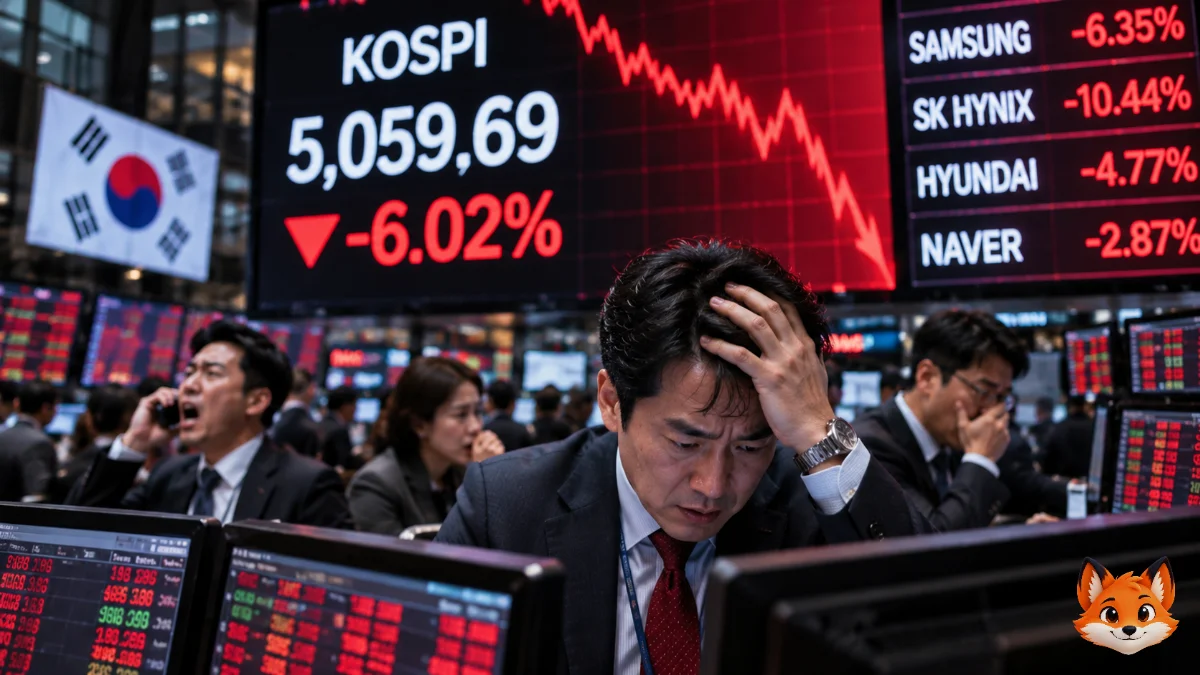
Jensen Huang exits NVIDIA as Musk enters the picture
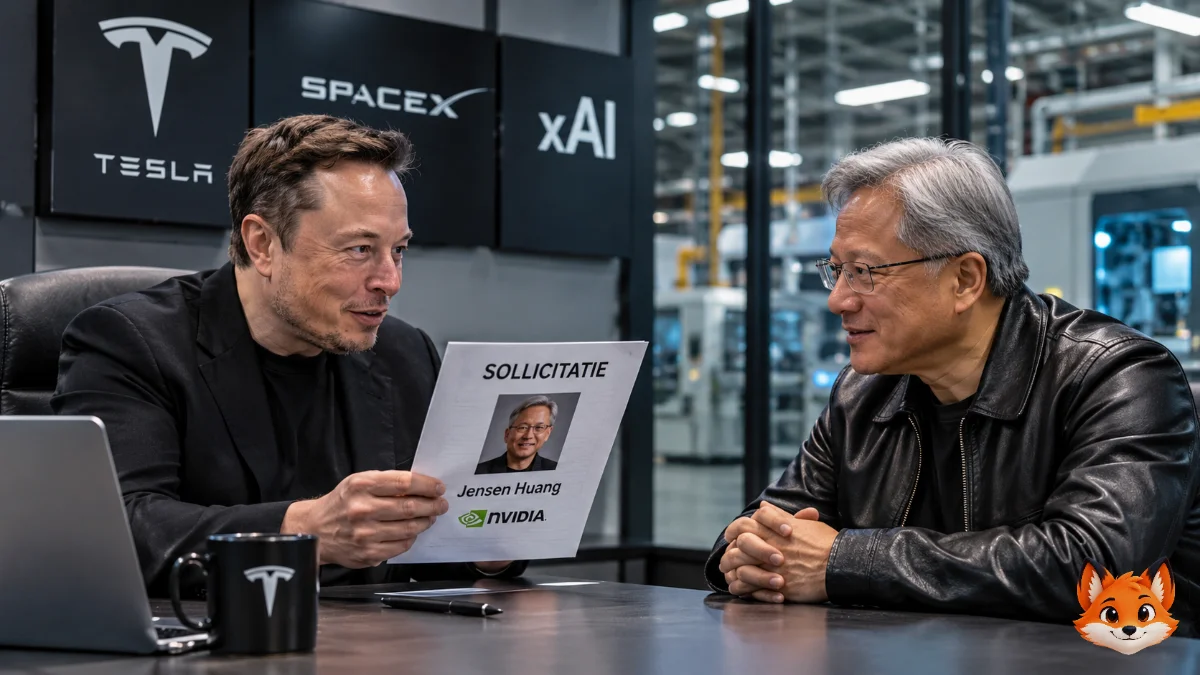 AI image
In short
- Jensen Huang resigned as NVIDIA CEO and board member on November 12, 2026.
- CFO Colette Kress will lead the company on an interim basis while the board searches for a permanent successor.
- NVIDIA shares fell around 14 percent intraday before closing 4.34 percent lower.
- Elon Musk said it would be an honor to hire Huang, but no formal offer has been announced.
Jensen Huang has abruptly left NVIDIA on November 12, 2026. The man who turned the company into a central force in the AI industry over more than three decades has resigned as CEO and board member with immediate effect. The stock took an immediate hit. Elon Musk also publicly said he would be honored to hire Huang. For investors, the key question is whether NVIDIA has lost its most important leader or whether the business can keep running as before.
Huang leaves while NVIDIA sits at the centre of the AI boom
NVIDIA confirmed the departure in a company announcement. Huang is stepping down as president, CEO and board member with immediate effect. He had led the company since co founding it in 1993.
The company appointed Chief Financial Officer Colette Kress as interim CEO. She will also retain her finance role for now. The board has started a search for a permanent successor, considering both internal and external candidates.
The board structure is also changing. Harvey C. Jones has been appointed as its first ever chair. He has served on NVIDIA's board for many years and previously led chip design company Synopsys.
The timing matters. NVIDIA is not just another chipmaker. Its processors power data centres used by companies to train and run AI models. Huang was also the public face of that growth.
Personal allegations turned into a corporate crisis
Huang's departure follows days of media reports about alleged extramarital relationships. One woman he was reported to have been involved with is suspected by US intelligence officials of having links to China.
That suspicion is not proof that she spied for China. NVIDIA has also said it has no reason to believe that company secrets or national security were compromised. Huang is expected to cooperate with the investigation.
The board met to discuss his position. His departure followed shortly afterwards. The precise internal reasoning has not been made public in full.
For shareholders, the possible consequences for corporate governance matter most. An investigation involving contacts, information security and oversight can raise questions about how NVIDIA manages risk. That affects more than the reputation of one executive. It also affects confidence in the company.
Colette Kress takes temporary control
Kress joined NVIDIA in September 2013 and has led its finance organisation for years. Before that, she spent nearly 25 years in finance roles at companies including Cisco and Microsoft.
She knows the numbers, customers and investment plans. That makes her a logical temporary choice. But an interim appointment is not the same as a permanent succession.
Reuters previously named two internal figures viewed by analysts and investors as possible candidates: Kress and Ian Buck, an influential technical leader at NVIDIA. Other names mentioned in media reports include AMD chief Lisa Su, Arm CEO Rene Haas and Intel CEO Lip Bu Tan. No appointment has been announced for any of these external candidates.
What does that mean? An interim CEO runs the company until the board appoints a permanent successor. Kress's temporary appointment does not reveal who will ultimately take charge or what strategy that person will choose.
The choice matters. NVIDIA needs a leader who understands both technical development and the huge investments being made in AI infrastructure. A strong CFO is not automatically the best person to lead a global technology company over the long term.
Musk adds a new twist with one sentence
Elon Musk entered the discussion before Huang's departure was announced. On X, he responded to a post asking him to hire Huang. His reply was: “That would be an honor.”
That is notable. Musk runs Tesla, SpaceX and xAI, among other ventures. Those companies use substantial computing power and buy advanced chips from NVIDIA. Huang has deep expertise in chip development, data centres and the AI infrastructure Musk wants to expand.
But one sentence is not an employment contract. Musk did not name a role, salary, business unit or start date. There is no public evidence of a formal offer or talks between the two men.
A move to a Musk company would open a new chapter. Huang could apply his knowledge on the customer side of the AI market rather than at the largest supplier of AI chips. For now, that remains speculation.
NVIDIA shares fell sharply but recovered during the session
The market reaction was immediate. NVIDIA closed at $173.73 on November 11. On November 12, the stock fell to an intraday low of $148.80. That was around 14 percent below the previous close.
The shares recovered part of the loss later in the day. NVIDIA closed at $166.19, down 4.34 percent from the previous trading session. Trading volume reached approximately 741 million shares.
The difference between the intraday low and the closing price matters. Someone looking only at the biggest fall gets a different picture from an investor looking at the closing price. The market was shocked, but some investors bought during the decline.
In numbers: Imagine you held €1,000 worth of NVIDIA shares before the market reaction. A 4.34 percent decline represents an unrealised loss of about €43.40. At the intraday low of around 14 percent, the temporary paper loss was about €140. This example uses the percentage share price movement and excludes trading fees and currency effects.
The share price decline does not by itself prove that NVIDIA's business model is broken. The market is pricing in uncertainty: who will lead the company, how the investigation will unfold and whether the strategy will remain unchanged.
The financial results tell investors another story
NVIDIA's operating performance before Huang's departure was exceptionally strong. In the second quarter of fiscal 2027, the company reported revenue of $96.2 billion. That was 106 percent higher than a year earlier.
Data centre revenue reached $89 billion, up 117 percent year on year. This business is the engine behind AI growth. NVIDIA had forecast third quarter revenue of around $108 billion, with a range of 2 percent either way.
Those figures matter when investors value the stock. They are not only paying for what NVIDIA sells today. They are also pricing in the expectation that demand for AI chips will keep growing. If demand remains high and NVIDIA maintains its margins, the company could remain financially strong despite Huang's departure.
But an important date is approaching. NVIDIA will publish its third quarter results on November 17. Kress's comments will carry extra weight. Investors will listen for updates on chip demand, production capacity, deliveries to China and the succession process.
A recovery depends on more than a new CEO
A recovery in the share price does not depend only on the name of the next chief executive. The market will want evidence that the company can continue delivering the same results without Huang.
There are three broad scenarios:
- A smooth transition: Kress keeps the organisation stable, the board appoints an experienced successor and demand for AI chips continues to grow.
- Prolonged uncertainty: the succession process takes time and the investigation raises further questions. Investors may then demand a higher risk premium.
- A strategic shift: a new CEO changes investment plans, customer relationships or the approach to the Chinese market. That could affect revenue and margins.
The next quarterly results will offer an early indication of how the business is performing, but they will not resolve the leadership issue. Strong revenue does not automatically mean that the stock will immediately return to its previous level.
For anyone holding NVIDIA shares, these are the questions to follow:
- Who becomes permanent CEO, and will that person come from inside NVIDIA?
- Will Colette Kress remain CFO after her interim period?
- What will the company say on November 17 about revenue, margins and demand for AI chips?
- Will new facts emerge from the investigation into Huang's contacts?
- Will the share price decline remain a short term shock, or will investors reassess the company's valuation?
NVIDIA still holds an enormous position in the AI market. But the man who embodied the company for years has left. This article is for educational purposes and is not investment advice.
Sources
- NVIDIA, NVIDIA Announces CEO Transition, November 12, 2026
- NVIDIA, Financial Results for Second Quarter Fiscal 2027, August 26, 2026
- NVIDIA, Third Quarter Financial Results Conference Call, October 28, 2026
- Reuters, Wall Street edges up, Nvidia drops after CEO resigns, November 12, 2026
- Reuters, Who would be next CEO at Nvidia? Top engineer and CFO favored as candidates, November 11, 2026
- Associated Press, Jensen Huang built the company that powers AI. Now Nvidia must find a way forward without him, November 12, 2026
- Business Insider, Elon Musk says he would hire Jensen Huang, November 12, 2026
- Stock Analysis, NVIDIA historical share prices, November 12, 2026