Musk considers Tesla SpaceX merger, but no deal exists
 AI image
In short
- Tesla and SpaceX have formed independent committees to explore a possible merger.
- After the announcement, SpaceX rose 8 percent and Tesla 1.8 percent in after hours trading.
- SpaceX reported net income of 4.4 billion dollars for the third quarter of 2026.
- The companies have not agreed on terms, and the merger may never happen.
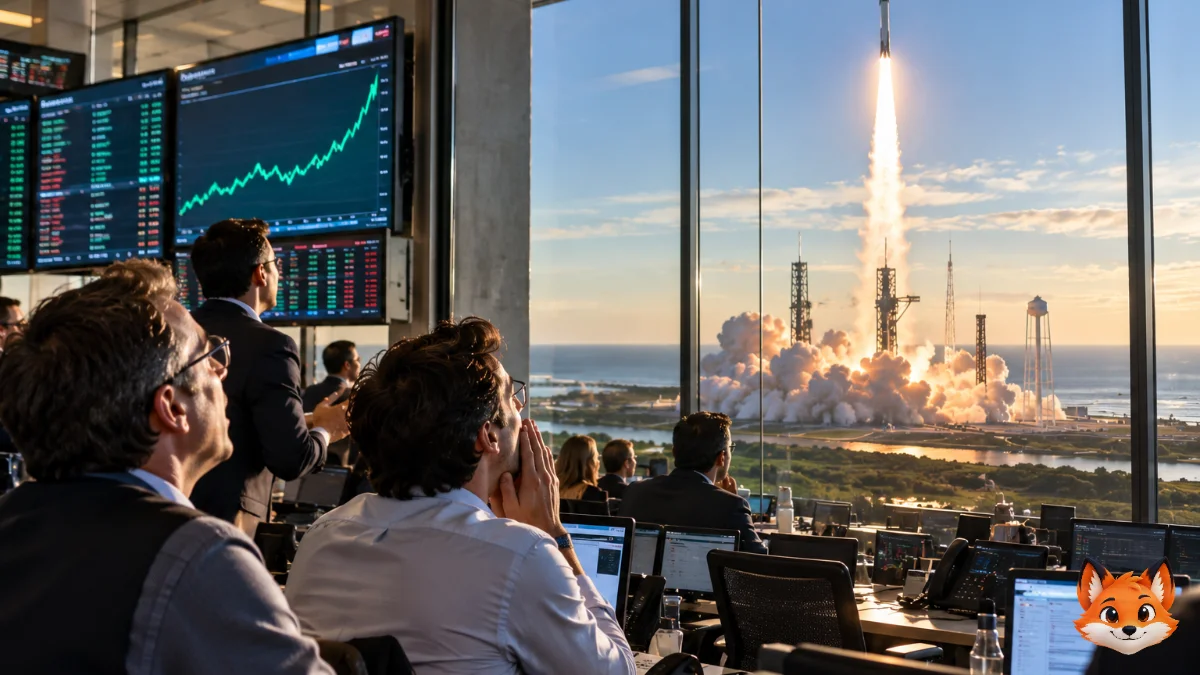
On October 20, 2026, Elon Musk said he thinks a merger between Tesla and SpaceX would be a good idea. The market reacted immediately: SpaceX rose 8 percent in after hours trading, while Tesla gained 1.8 percent. But there is no agreement yet. Independent committees are exploring the possibility and must first decide whether a transaction makes sense and can be completed.
That distinction matters to anyone watching the shares. A market reaction shows what investors expect at that moment. It does not prove the merger will happen or that the combined company would be worth more.
Markets reacted before any agreement existed
The announcement came during an investor call about SpaceX's quarterly results. Musk said both companies had formed special committees to discuss a merger. Those committees consist of independent directors. Musk said he would not take part in their discussions because his roles at both companies create a conflict of interest.
Reuters reported that SpaceX rose 8 percent in after hours trading following his comments. Tesla gained 1.8 percent at the same time. These moves took place outside regular market hours, when fewer shares typically change hands. Prices can look different when normal trading resumes.
What does that mean? An after hours price is formed when shares trade outside the market's regular opening hours. With fewer buyers and sellers active, the price can move more sharply than it does during the normal session.
The first reaction mainly shows that investors find the idea interesting. The actual terms remain unknown. That is the difference between an announcement and a completed merger.
Tesla and SpaceX make money in different ways
Tesla makes electric vehicles, batteries and energy storage systems. SpaceX builds and launches rockets and operates Starlink, its satellite internet service. The companies therefore have different customers, costs and sources of revenue.
In its 2025 annual report, Tesla recorded revenue of 94.83 billion dollars and net income of 3.79 billion dollars. SpaceX reported net income of 4.4 billion dollars for the third quarter of 2026. These figures cover different reporting periods, so they should not be compared as if they covered the same amount of time.
SpaceX is also growing beyond rocket launches. For the third quarter, it reported revenue of 14.58 billion dollars, up 161 percent from a year earlier. Its Super Intelligence division, which includes AI and computing capacity, generated 7.56 billion dollars in revenue. Connectivity, including Starlink, generated 5.25 billion dollars.
The numbers help explain why a combination might look attractive. Tesla brings vehicles, energy storage, robotics and chip development. SpaceX brings satellites, rockets and data centre infrastructure. Musk says cooperation on AI software, chip design and robotics could create benefits. Whether a merger would deliver those benefits remains to be demonstrated.
A merger could increase Musk's control
Combining the companies would mean more than placing two names under one roof. It could change how billions in investment are allocated and who makes those decisions. A single company could bring vehicle projects, AI, satellites and spaceflight under one board.
That might be efficient, but it also raises difficult questions. Which projects get priority if there is not enough money for everything? How would investment be divided between the divisions? And which shareholders would benefit if one business grows faster than another?
Reuters reported that Musk owns nearly one fifth of Tesla and just under half of SpaceX. Those stakes make the potential transaction particularly sensitive. Musk has substantial influence, but his ownership is not the same as complete control over every decision. Independent committees must examine the deal, and shareholders would ultimately need to approve it.
Watch out: A merger can change a share's value, but the direction is uncertain. The outcome depends in part on the transaction price, the share exchange ratio, and the debts and obligations carried into the combined company.
SpaceX profits do not automatically make a merger attractive
SpaceX reported net income of 4.4 billion dollars in the third quarter of 2026, compared with a loss of 1.1 billion dollars in the same quarter a year earlier. That is a major change. At the same time, the company spent 19.6 billion dollars on capital investments, particularly AI infrastructure. According to Reuters, SpaceX expects capital expenditure of 35 billion to 40 billion dollars in the fourth quarter.
The difference between profit and investment spending matters. Net income is what remains after costs and taxes are accounted for under reporting rules. Capital investment is spending on assets such as buildings, equipment and computing systems that are intended to be used for several years. A company can therefore report a profit while also spending enormous sums.
The quarterly results may explain the interest in SpaceX, but they do not tell investors what a merger would be worth. That requires actual terms. These include the valuation of each company, the share exchange ratio and how future investment will be funded.
Shareholders may have different interests
A merger would not automatically benefit every investor in the same way. Tesla shareholders may ask whether they want to exchange part of their exposure to vehicles and energy for a larger stake in spaceflight and AI. SpaceX shareholders would need to decide whether adding Tesla increases the value of their investment or increases its risks.
Suppose you own 1,000 euros worth of Tesla shares. If the share price rises 1.8 percent after a news announcement, that position would be worth about 1,018 euros at that moment, before costs or taxes. If it falls 1.8 percent, the same position would be worth about 982 euros. This is an arithmetic example based on a price move, not a forecast for your investment.
The market reaction can change quickly when new information arrives. That could include a proposal with a specific price, a statement from one of the committees or news that the talks have ended. Looking only at the first rise misses much of the story.
Regulators could delay or block the plan
Even if the companies agree on terms and shareholders approve them, the transaction could still face regulatory review. In the United States, competition authorities review major mergers when they could restrict competition. The Federal Trade Commission and the Department of Justice consider issues such as prices, consumer choice and innovation.
The exact review depends on the structure of the transaction and the markets in which the companies operate. The FTC explains that some mergers must be reported in advance and that authorities can investigate a deal before it closes. That does not mean this merger would automatically be blocked. It does mean an agreement between the companies would not be the final step.
There is also a governance question: can the independent committees show that the terms are fair to shareholders in both companies? Rules on related party transactions matter because Musk has an important role in both businesses and Tesla has previously had business relationships with SpaceX.
Questions to ask before judging the market reaction
- Has a specific proposal been published, or are the committees only exploring the possibility?
- What valuations would Tesla and SpaceX receive, and how many shares might be issued?
- Who would control the combined company, and how would conflicts of interest be handled?
- How much would the combined business need to invest in vehicles, AI, satellites and spaceflight?
- Which shareholder and regulatory approvals would still be required?
The possible merger is news, not a completed transaction. The price moves on October 20, 2026 show that investors take the idea seriously, but the terms and outcome remain open. For more background on the company and the value of a share, read One SpaceX share for every US child: what is it worth?.
This article is for educational purposes only and is not financial advice.