
Germany's auto industry is losing its grip
 AI image
In short
- BMW has reduced its 2026 operating margin outlook for its automotive division to between minus 0.5 and plus 0.5 percent.
- Mercedes expects an adjusted return on sales of just 2 to 3 percent for its passenger car division in 2026.
- Germany lost 42,300 automotive industry jobs in one year.
- An investment of 10,000 euros in BMW or Mercedes was worth approximately 3,485 or 3,185 euros less on 17 November 2026 than a year earlier.
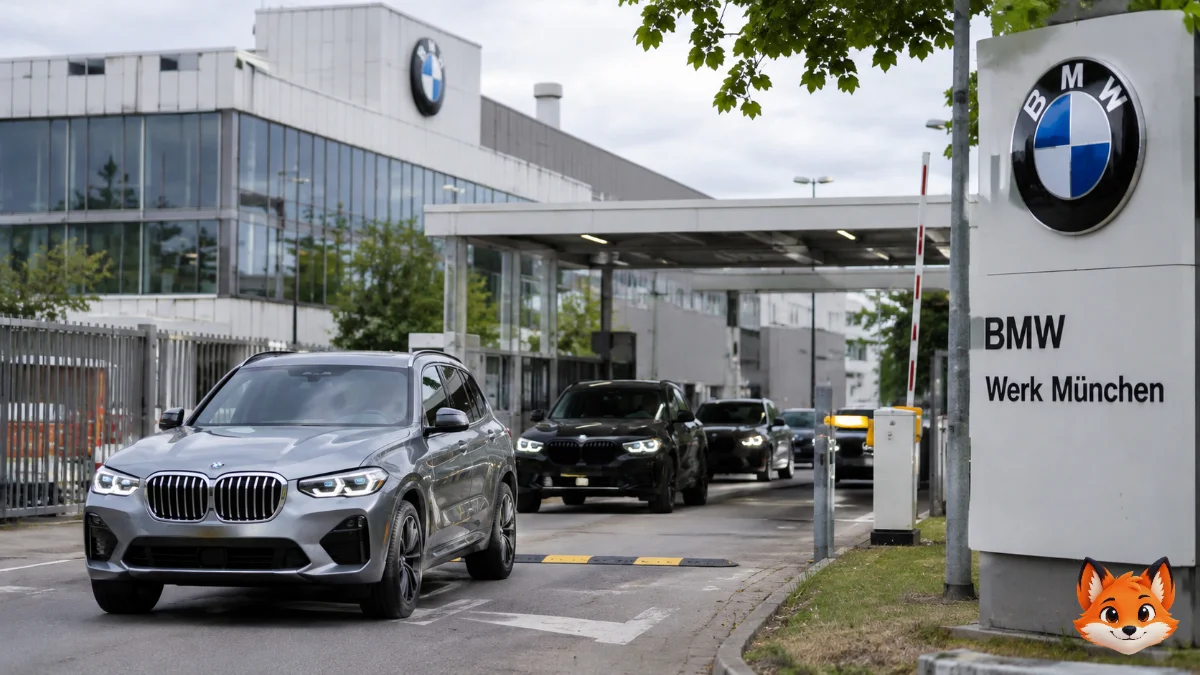
A BMW leaving the factory represents income for dozens of German businesses. But what happens when those cars become harder to sell? Germany's automotive industry is under serious pressure in 2026. BMW has reduced its profit outlook for its car division to almost zero. Mercedes is also struggling to maintain its margins. And behind these two brands stands an economic network far larger than the factories themselves.
BMW is watching its profit margin almost disappear
On 4 November 2026, BMW published its third quarter results. The figures show just how difficult the situation has become.
The operating profit margin of BMW's automotive division stood at 3.5 percent during the first nine months of 2026. A year earlier, it was 5.9 percent. Operating profit fell by 43.8 percent over that period.
The most striking figure is the company's revised outlook for the full year. BMW now expects its reported operating margin for the automotive division to be between minus 0.5 and plus 0.5 percent. Its previous forecast was between 1 and 3 percent.
That is a serious warning. BMW is expecting almost no operating profit from its core car business under this measure.
However, there is an important difference between the automotive division and the entire company. BMW still reported 2.083 billion euros in profit before tax for the third quarter. The group as a whole is therefore not operating at a loss.
The problem lies mainly in the profitability of its core business. And that business needs to finance future investments.
Mercedes faces the same problem but has a different financial position
Mercedes-Benz is reporting similarly concerning figures.
In the third quarter of 2026, its passenger car division achieved an adjusted return on sales of 2.5 percent. A year earlier, that figure was 4.8 percent.
During the first nine months, adjusted operating profit at Mercedes Cars reached 2.402 billion euros. That was 41.9 percent lower than during the same period in 2025.
Mercedes has also revised its full year outlook. Its passenger car division now expects an adjusted return on sales of 2 to 3 percent. The previous forecast was between 3 and 5 percent.
However, Mercedes is not running out of money. Its industrial business held net liquidity of 31 billion euros at the end of September. That provides an important financial buffer.
Its vans division and financial services business are also performing better than its passenger car operations. These divisions help keep the overall company profitable.
The problem is not that the company will close its doors tomorrow. The problem is that its traditional profit engine is generating less money.
China has changed the competitive balance
One major cause of the pressure is thousands of kilometres away.
Chinese car manufacturers have expanded their position in the global market. They compete particularly aggressively in electric vehicles, using competitive prices and rapidly updated product ranges.
European manufacturers are feeling the impact. According to industry association ACEA, more than 1 million Chinese made vehicles were imported into the European Union in 2025. They represented 7 percent of total European car sales.
This changes the competitive environment. German manufacturers must invest in new technology while keeping their existing models affordable and profitable.
BMW reported that its sales in China fell by approximately a quarter in the third quarter of 2026 compared with the previous year.
Mercedes also reported increasing competition in China. Sales outside China, by contrast, developed positively.
There is no single cause behind the problems. Chinese competition, higher costs, import tariffs and currency movements are all putting pressure on results.
What does that mean? A car manufacturer does not automatically earn more money by selling a more expensive vehicle. If production costs increase while competition puts pressure on selling prices, less profit remains. This is exactly the problem facing Germany's premium car manufacturers.
The real economic damage is happening among suppliers
A car factory is only the visible part of a much larger business network.
Think of companies producing braking systems, electronics, tyres, seats, batteries and other components. There are also transport companies, technical service providers and local shops that depend on factory workers' incomes.
When BMW or Mercedes produces fewer cars, these businesses feel the impact almost immediately.
Germany's Federal Statistical Office, Destatis, published striking figures on 14 August 2026. At the end of the first half of 2026, the German automotive industry employed 42,300 fewer people than a year earlier.
That represents a decline of 5.8 percent. Total employment in the sector stood at 691,500. There had not been so few people working in the industry since 2005.
Exports are also under pressure. During the first seven months of 2026, Germany exported approximately 2 million new passenger cars. That was 4 percent fewer than during the same period in 2025.
The value of those exports fell by 8.9 percent.
That last figure matters. Germany is not only selling fewer cars. It is also receiving less export revenue.
A complete collapse would affect the whole German economy
What happens if the situation deteriorates further?
A scenario in which BMW and Mercedes both significantly reduce production would have consequences for the entire German economy.
The first impact would be felt by employees and suppliers. Lower production means fewer orders, less overtime and potentially more redundancies.
Then come the consequences for local economies. Households spend less, municipalities receive less tax revenue and businesses postpone investments.
The wider European economy would also feel the impact. Germany is a major exporter and trading partner. Dutch and Belgian businesses also supply components, machinery and services to German manufacturers.
A severe decline in German industry would therefore affect companies beyond Germany's borders.
However, it is important to distinguish between a serious industrial crisis and the bankruptcy of BMW or Mercedes. Both companies still have substantial financial resources. Their latest figures show an industry under pressure, not the immediate collapse of either company.
Investors are already feeling the consequences
Share prices show that investors are taking the problems seriously.
On 17 November 2025, BMW closed at approximately 87 euros per share. On 17 November 2026, the share was trading at around 56.68 euros.
That represents a price decline of approximately 34.9 percent.
Mercedes shares moved from approximately 58.52 euros to 39.88 euros over the same period. That is a decline of approximately 31.9 percent.
In numbers: Suppose you had invested 10,000 euros in BMW shares on 17 November 2025. Based on the prices above, that position would have been worth approximately 6,515 euros on 17 November 2026. Your loss would be around 3,485 euros. With Mercedes, 10,000 euros would have been worth approximately 6,815 euros. This excludes dividends, transaction costs and taxes.
These are share price comparisons, not total returns. Dividends received are not included.
For investors, the important lesson is that a famous brand does not protect a company against falling profits. A business can be popular worldwide and still face serious financial pressure.
Readers interested in the wider consequences for financial markets can also read our earlier article: 2026: Are we approaching another financial crisis?.
The electric transition offers opportunities but takes time
Not everything is negative.
BMW now sells a significant proportion of vehicles with electric drivetrains. In the third quarter of 2026, fully electric vehicles accounted for 20 percent of deliveries.
Mercedes also reported record electric vehicle sales during the third quarter. Sales increased by 61 percent compared with the same quarter in 2025.
This shows that demand for German electric models still exists.
However, the transition costs billions. Manufacturers must develop new models, adapt factories and invest in software and battery technology.
At the same time, they must keep their existing production operations running. That is a difficult combination.
The coming years will show whether German manufacturers can turn their technological capabilities into healthy profit margins.
Questions worth asking
- How much revenue and profit at BMW and Mercedes still comes from traditional passenger cars?
- How much money do both companies have available to withstand a period of low profits?
- How dependent are European suppliers on German car manufacturers?
- How quickly can German brands compete with Chinese electric vehicles?
- How much of today's share price is based on future profits rather than current results?
This article is for educational and informational purposes only and does not constitute financial advice.
Sources
- BMW Group, Q3 2026 results and revised outlook, 4 November 2026
- Mercedes-Benz Group, Q3 2026 financial results, 28 October 2026
- Destatis, Employment losses in Germany's automotive industry, 14 August 2026
- Destatis, German passenger car exports, 21 September 2026
- ACEA, EU and China vehicle trade, 4 May 2026
- Yahoo Finance, Historical BMW and Mercedes share prices. Yahoo Finance is a commercial financial information service. The prices shown are indicative historical market data.