
Epstein case gets new analysis, but no proof of murder
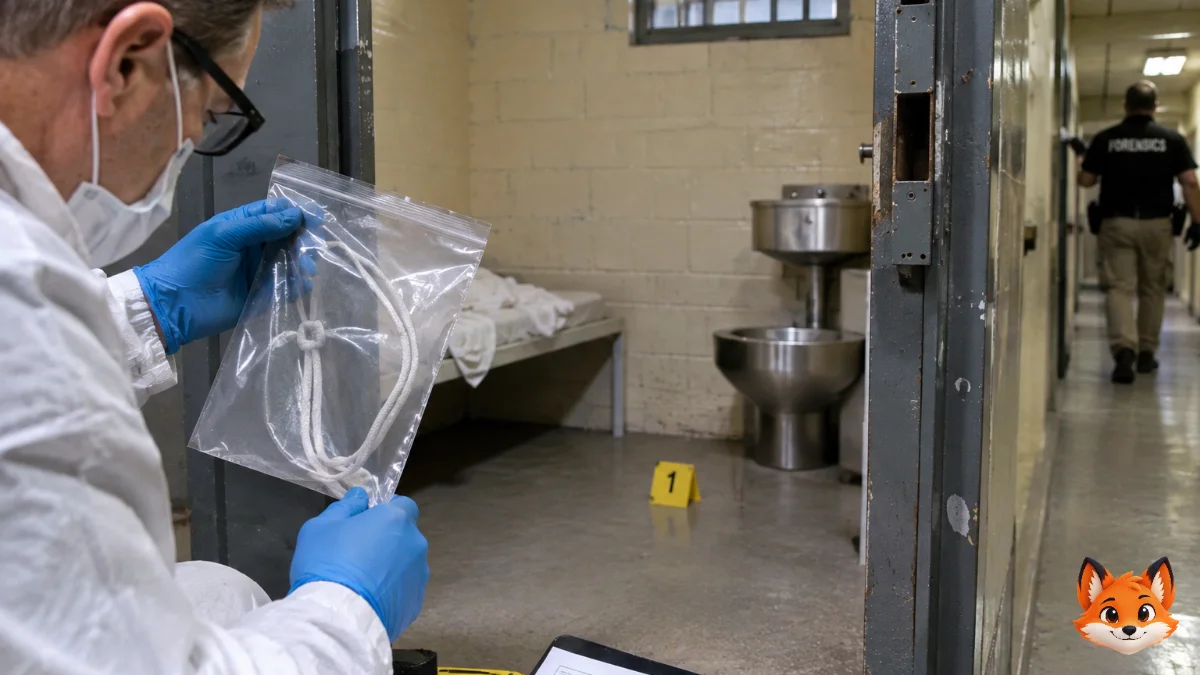 AI image
In short
- Forensic expert Michael Freeman presents a new analysis of Epstein's autopsy on November 16, 2026.
- The official cause of death from 2019 remains suicide by hanging.
- A 2023 US government investigation found serious prison failures but no evidence of murder.
- Missing evidence and incomplete documentation complicate an independent review.
On August 10, 2019, Jeffrey Epstein was found dead inside his prison cell in New York. The official conclusion was suicide by hanging. More than seven years later, that conclusion is facing renewed scrutiny. A new analysis by forensic expert Michael Freeman raises questions about the injuries, autopsy photographs and the investigation into Epstein's death. But is there actually evidence of murder?
A new analysis puts the official conclusion under renewed scrutiny
On November 16, 2026, Dr Michael Freeman is presenting his analysis of Epstein's death. He examined the complete medical examiner's file, including autopsy photographs and medical records.
Freeman is affiliated with Maastricht University and Oregon Health & Science University. He is also editor in chief of the Journal of Forensic and Legal Medicine. His academic specialisation includes forensic medicine and the biomechanics of injuries.
The analysis became possible after Epstein's family made the complete medical examiner's file available in 2025. His brother, Mark Epstein, has questioned the official cause of death for years.
The timing is significant. US authorities have already completed several investigations. Yet Freeman believes parts of the original examination deserve another look.
In an earlier interview with CBS News, he said he had identified injuries in the photographic material that he believes were not adequately explained by the original examination.
At the time of writing, his presentation is still underway. Its final conclusions must therefore be distinguished from the claims made before the event.
The fractures in Epstein's neck had already become controversial
One of the main points of disagreement concerns the injuries to Epstein's neck.
The official autopsy report dated August 11, 2019, describes fractures to both superior horns of the thyroid cartilage and the left horn of the hyoid bone.
These are anatomical structures in the neck that help support the airway.
The presence of these fractures has previously prompted debate. In 2019, pathologist Michael Baden, who advised the family, argued that the combination of three neck fractures warranted further investigation into possible strangulation by another person.
The original medical examiner maintained the conclusion of suicide by hanging.
There is an important medical distinction here. Neck fractures can occur under different forms of pressure on the neck. Finding fractures alone does not automatically establish how someone died.
What does that mean?
An autopsy examines physical evidence after death. The medical examiner uses injuries, tissue damage and other findings to establish the cause of death. An individual injury is not independent proof of murder.
Freeman intends to use biomechanical analysis to investigate which forces could have produced the observed injuries. This includes examining the position and pattern of the damage.
The prison made serious mistakes during Epstein's final hours
The circumstances inside the prison were deeply problematic.
In June 2023, the US Department of Justice published a detailed investigation into Epstein's custody and supervision at the Metropolitan Correctional Center.
The Inspector General identified several serious failures.
On August 9, 2019, Epstein was left alone in his cell after his cellmate was transferred. Prison staff did not arrange a replacement, despite an earlier instruction from the psychology department.
Security procedures also failed.
According to the investigation, employees did not carry out mandatory checks. Some records were falsified afterwards. The camera recording system was also partially malfunctioning.
Available footage showed that nobody entered the relevant prison housing area through the monitored common area between approximately 10:40 p.m. on August 9 and 6:30 a.m. on August 10.
That detail matters. The cameras did not show the inside of Epstein's cell.
Watch out:
Missing footage from inside the cell does not prove murder. Equally, footage of the corridor cannot establish everything that happened inside the cell. That distinction determines how much investigators can conclude from surveillance recordings.
The Inspector General concluded that prison staff had left Epstein without supervision for hours because of their failures.
However, the investigation found no evidence that another person caused his death.
Missing evidence makes the investigation more complicated
One notable aspect of Freeman's new analysis concerns how the original investigation was conducted.
According to information he shared with CBS News before the presentation, no photographs were taken of Epstein's body inside the prison cell when he was discovered.
The material used as the ligature was also not preserved for further examination.
That matters when conducting a biomechanical reconstruction. Investigators want to understand how a material behaves under pressure, how force is distributed and which injuries that process could produce.
When the original material is unavailable, an independent reconstruction becomes more difficult.
That does not automatically mean the original conclusion was wrong. It does mean that certain questions are harder to answer afterwards.
The complete medical documentation is therefore important. The final conclusion is only one part of the evidence. Photographs, descriptions and the underlying observations also need to be available for examination.
The US government continues to classify the death as suicide
In July 2025, the US Department of Justice and the FBI published a new statement about their investigation into Epstein.
The FBI maintained its conclusion that Epstein had taken his own life.
The agency referred to the original autopsy report and the Inspector General's investigation from 2023.
The FBI also reported examining more than 300 gigabytes of data and physical evidence.
The same statement said Epstein had harmed more than one thousand victims. The department also stated that it had found no credible evidence of a so called client list used to blackmail prominent individuals.
The conclusion about his death remained unchanged.
That provides important context for the new analysis. Freeman is free to reassess existing findings, but his research does not automatically replace the official cause of death.
The presentation may answer new questions, but independent scrutiny remains essential
The November 16 presentation was announced as a reassessment of the medical evidence. It compares the original medical examiner's reasoning with a new biomechanical analysis.
According to University College London, the circumstances in which Epstein's body was discovered will also be considered.
The university announced that the underlying research materials would be made publicly available.
That is more important than a dramatic statement during a presentation.
A scientific conclusion must be open to scrutiny. Other experts should be able to examine the same evidence and determine whether the reasoning stands up.
There is also a difference between a disputed medical interpretation and a murder that can be established through criminal evidence. The latter requires more than disagreement over neck injuries.
The new analysis deserves attention, but the burden of proof remains unchanged.
Questions worth asking
- Which specific injuries has Freeman identified as insufficiently explained?
- What biomechanical calculations support his conclusion?
- Are the original autopsy photographs and medical records fully available?
- Can independent forensic experts reproduce his findings?
- Is there new evidence that genuinely contradicts the earlier FBI conclusion?
This article is for educational purposes only and does not constitute financial advice.
Sources
- University College London, A scientific analysis of the cause and manner of Jeffrey Epstein's death, November 16, 2026
- US Department of Justice, Investigation and Review of the Federal Bureau of Prisons, June 2023
- US Department of Justice and FBI, FBI Memo, July 2025
- Maastricht University, Dr Michael Freeman, Academic Profile
- CBS News, Professor to present Epstein findings that raise questions about whether he killed himself, October 2, 2026