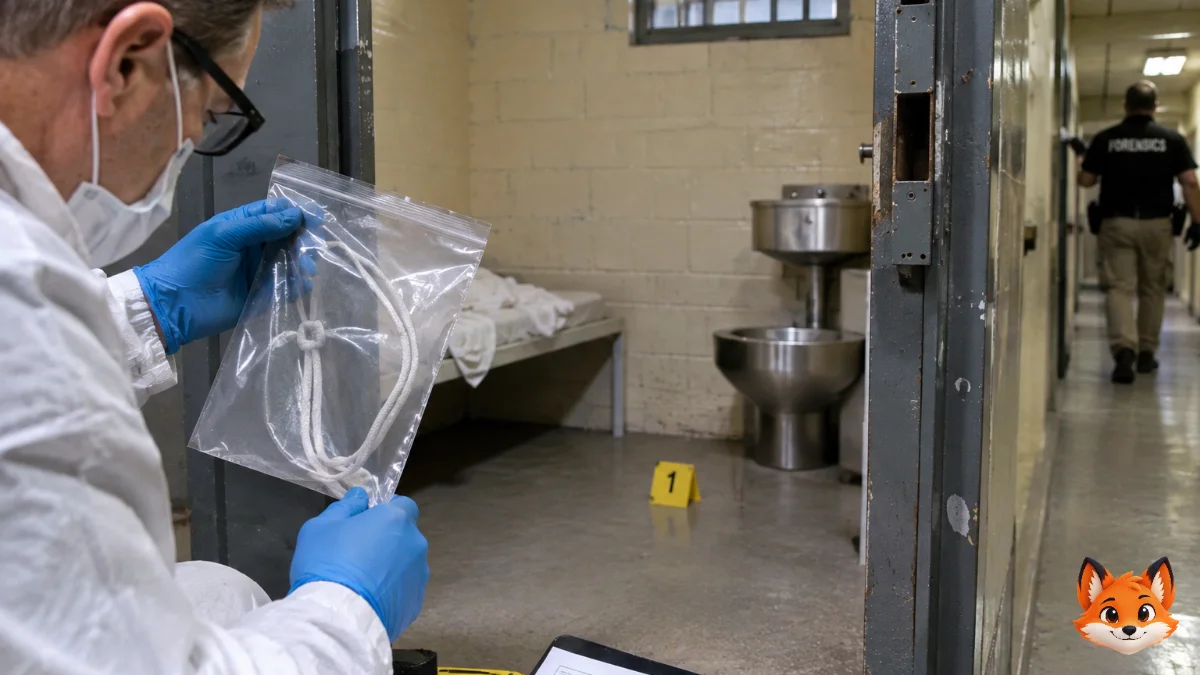
Five outages in one week. What is happening in America?
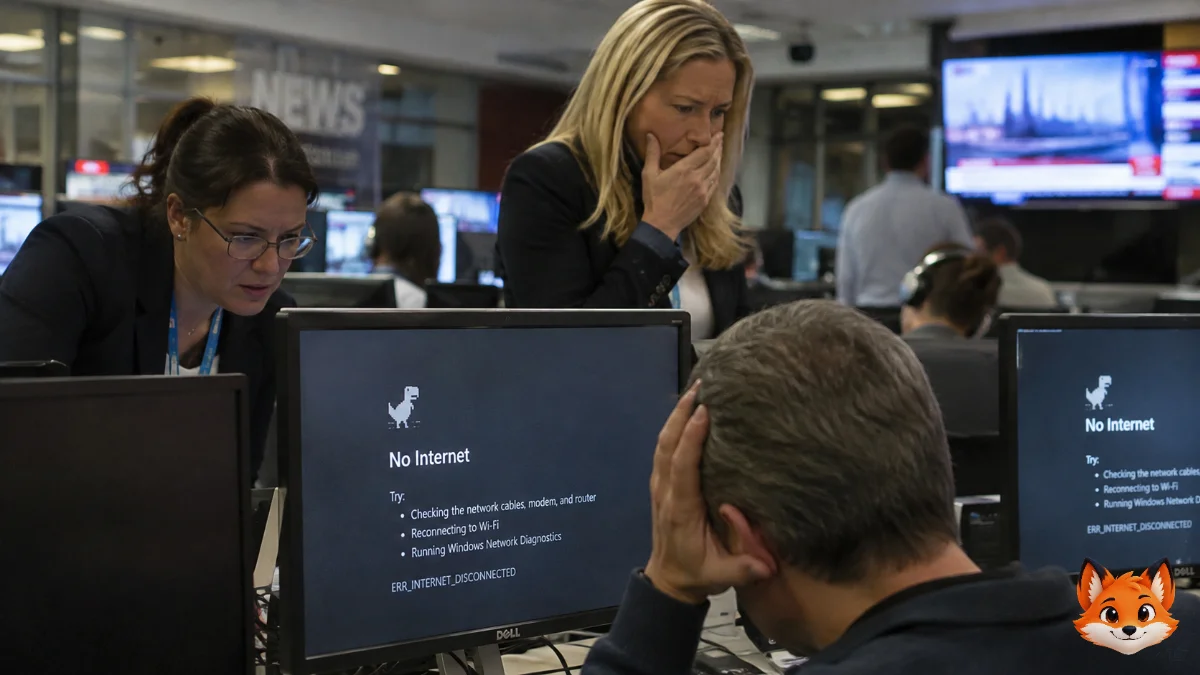 AI image
In short
- On 17 November 2026, the NSA reported an outage affecting its highly classified internal communications network.
- A technical failure at the FAA caused a nationwide flight ground stop on 13 November and more than 18,000 cancellations.
- Malicious software reached websites belonging to 178 organisations, including CNN and the BBC, through Optimizely.
- US security officials say there is no evidence that the separate incidents were part of one coordinated cyberattack.
More than 18,000 cancelled flights, customers unable to access their banks and malicious software appearing on websites belonging to major news organisations. Within days, America's digital infrastructure suffered several blows. On 17 November, another striking report emerged: the highly classified internal communications network of the NSA was also down. What is going on?
The NSA loses access to its internal communications network
On 17 November 2026, reports emerged that the internal communications network of the US National Security Agency (NSA) was not working.
This is a highly secure network used by employees to exchange classified information. It is not an ordinary internet connection. The network supports one of the world's most important intelligence agencies.
CNN reported the outage, citing five people familiar with the situation. Reuters said the NSA was investigating the scope of the problem. At the time, there was no immediate evidence of a cyberattack.
That distinction matters. An outage at an intelligence agency does not automatically mean an enemy has attacked it. But when an organisation specialising in digital threats loses its own communications tools, questions naturally follow.
US aviation had already come close to a five hour shutdown
On Friday, 13 November, the US air traffic control system experienced a technical problem. The Federal Aviation Administration (FAA) responded by temporarily grounding departing flights nationwide.
The disruption began during work on a communications network in Arkansas. According to the initial investigation, a new router generated an enormous amount of data traffic. The system received around 1,000 connection attempts every four to five seconds.
This destabilised communications and radar feeds. A total of 17 of the 22 air route traffic control centres were affected.
The FAA stabilised the system at around 8:15 p.m. local time. The damage had already been done. Reuters reported that more than 18,000 flights were cancelled over several days.
The FAA stressed that aircraft already in the air were able to land safely. This was not a situation in which aircraft suddenly became uncontrollable.
What does that mean? A router directs data traffic between networks. If a device generates thousands of unwanted or faulty connection attempts, a much larger network can become unstable. One technical component can create a problem affecting thousands of flights.
Banks also experienced problems with accounts and payments
On Monday, 16 November, customers of several US banks reported problems with online services.
JPMorgan Chase, Wells Fargo, Bank of America and U.S. Bank were among the institutions whose customers reported difficulties accessing accounts or completing payments.
JPMorgan Chase said a software bug in its own hardware systems had caused the problems. The bank stressed that there was no evidence of a cyberattack. It also said customers retained access to their funds.
However, the disruption was felt beyond Chase. When a payment moves through several financial institutions, a problem at one major bank can delay transactions at other banks.
For consumers, the distinction is frustrating. Your money may still be in your account, but you may be unable to make a payment at that moment.
CNN and the BBC were affected through a software supplier
Perhaps the most concrete cyber incident in this series took place on 16 November.
Researchers discovered malicious JavaScript code on websites belonging to major international organisations. These included CNN, the BBC, Zoom, Salesforce, HSBC and IKEA.
The attack was carried out through Optimizely, a software provider used by companies to test and modify their websites. Attackers exploited a vulnerability and inserted malicious code into customer projects.
Researcher Scott Helme of Report URI examined 1,611 scripts. A total of 188 were found to be infected, across 178 organisations.
The malicious code was designed to redirect cryptocurrency payments to wallets controlled by attackers. It could also collect payment card details, cookies and screenshots.
This is very different from an ordinary technical outage. This was an actual case of malicious activity.
However, the websites of CNN and the BBC were not necessarily hacked directly. The attack came through an external supplier whose software those websites used. Reuters reported that the number of visitors who actually suffered harm was still unknown.
Optimizely confirmed the security incident, fixed the vulnerability and removed the malicious code from affected projects.
The incidents look similar, but they are not the same
The combination of these incidents is striking. However, the known causes are very different.
| Incident | Known cause or status |
|---|---|
| Microsoft, 12 and 13 November | Server problems and increased load |
| US aviation, 13 November | Unstable communications network following router work |
| US banks, 16 November | JPMorgan Chase software bug |
| Websites of 178 organisations, 16 November | Malicious code delivered through Optimizely |
| NSA, 17 November | Cause not yet established |
US Homeland Security Secretary Markwayne Mullin said on 17 November that the recent outages were not linked to cyberattacks. He pointed to ageing systems on which new technology was being installed.
He expressed 98 percent certainty that the series of outages was not a cyberattack. That is his assessment, not an independently established finding covering every incident.
The NSA outage was also reported separately. Its cause had not yet been established.
So we cannot describe this as one proven attack on America. But there are several concrete examples of how vulnerable digital systems can be.
Financial consequences are already visible in the stock market
Outages do not only affect passengers and bank customers. Companies responsible for critical infrastructure can also face financial consequences.
Following the problems with US air traffic control, the suppliers came under pressure.
Reuters reported that shares in L3Harris, the contractor carrying out work for the FAA, fell 3.7 percent on Monday, 16 November.
Hewlett Packard Enterprise, the owner of router manufacturer Juniper Networks, fell 4.5 percent that day.
In numbers: If you held 10,000 dollars in L3Harris shares and the price fell by 3.7 percent, the position would lose approximately 370 dollars in market value. A 4.5 percent fall in HPE would mean a loss of 450 dollars. This is a simplified example, excluding other price movements and costs.
For investors, this shows that an outage can affect companies that do not directly provide services to consumers. A supplier of essential network equipment can suddenly find itself at the centre of a political and financial investigation.
The biggest problem is dependence on a handful of systems
These events expose a weak point. Modern societies increasingly rely on the same digital suppliers, networks and software components.
A bank can secure its own systems but still depend on external payment processing. A news organisation can secure its website but still receive malicious code through a supplier. Air traffic controllers can have clear safety procedures but still depend on a network that must deliver data.
That is the real risk.
An outage does not even need to be caused by a hostile government or organised hacking group to have major consequences. A faulty software update, a configuration error or an ageing system can be enough.
For the United States, this is particularly sensitive. The country has enormous technological and military capabilities, but those organisations also depend on infrastructure that must work every day.
The NSA outage makes that vulnerability even more visible. Its cause remains unknown, but it comes at a time when several other essential systems have experienced problems.
What does this mean for Europe and your money?
European banks, airports, governments and media organisations also use external software and international digital suppliers.
A problem at an American technology company does not automatically stop at the US border. The Microsoft outage showed how a problem at one major supplier can also affect European businesses and public services.
For your own money, the distinction between a cyberattack and a technical outage matters most. During a banking outage, your balance does not automatically disappear. But you may temporarily be unable to access your money or make a payment.
You can also read our earlier article: One cyberattack could lock you out of your money.
The events of November show that digital resilience is not just an IT department issue. It affects your travel, work, payments and financial security.
Questions worth asking
- How dependent is your bank on external IT suppliers?
- What happens to payments if a major bank temporarily goes offline?
- Can businesses continue operating if Microsoft or another cloud provider fails?
- Who is responsible when an external software provider distributes malicious code?
- How long can a country keep essential services running without its normal digital networks?
This article is for educational and informational purposes only and does not constitute financial advice.
Sources
- Federal Aviation Administration, Nationwide Ground Stop: Questions and Answers, 15 November 2026
- Reuters, Highly classified US national security communications network is down, 17 November 2026
- Reuters, US official says recent tech woes not tied to cyberattacks, 17 November 2026
- Reuters, Popular websites compromised in bid to steal crypto, 17 November 2026
- UK Parliament, Microsoft 365 outage, statement of 16 November 2026
- Optimizely, Official security incident status page
- Scott Helme, Report URI, World's Largest Brands Infected With Malware Via Optimizely, 16 November 2026