
The EU is adding a new CO2 bill for households
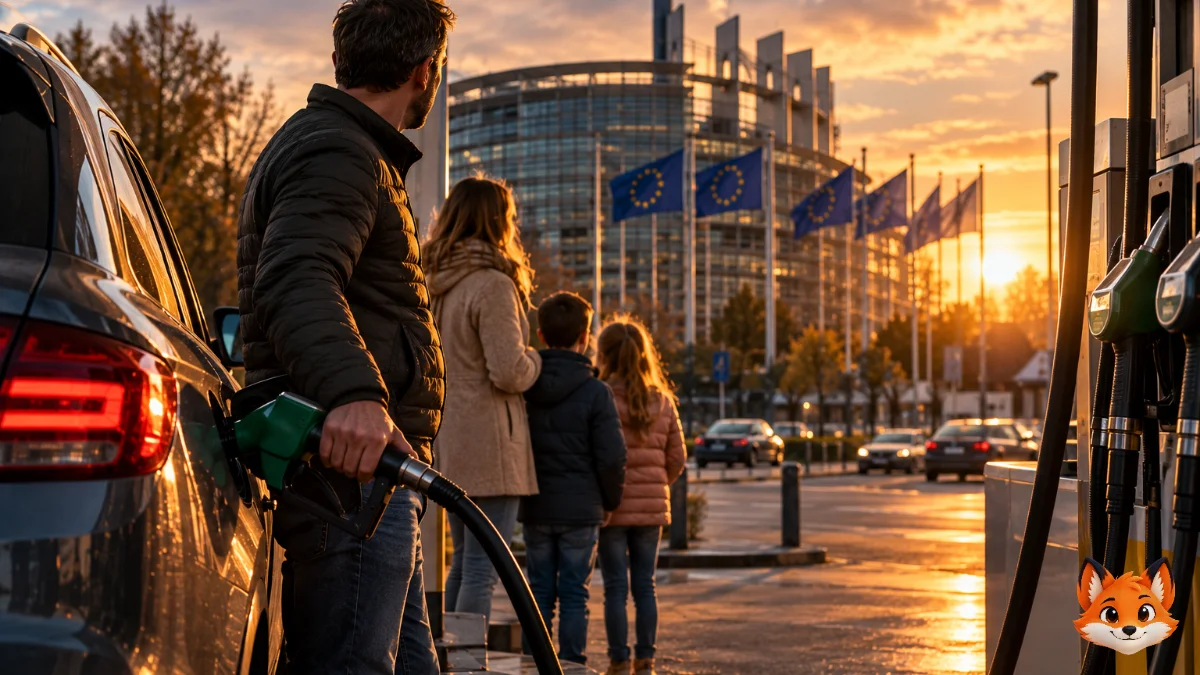 AI image
In short
- The EU ETS2 system becomes fully operational in 2028 and puts a carbon price on fossil fuels used for transport and heating.
- The Netherlands Environmental Assessment Agency estimates that typical Dutch households could pay 10 to 70 euros extra per month in 2030.
- Petrol, diesel, natural gas and heating oil are covered, and suppliers are likely to pass the cost on to customers.
- The EU says the system will speed up the transition and support vulnerable households, but assistance will not automatically cover every family's bill.
A typical Dutch household could pay between €120 and €840 extra per year by 2030 because of a new European carbon pricing scheme. That is the estimate for typical households from the Netherlands Environmental Assessment Agency. The European Union presents the scheme as a way to reduce emissions. For families who drive every day and heat their homes with gas or heating oil, it looks like another bill.
The scheme is called ETS2. It was initially scheduled to start in 2027, but its launch has been postponed until 2028. The question is not only how much it costs, but who pays and who made the decision.
The EU is putting a price on emissions from driving and heating
The European Union wants to reduce emissions and become climate neutral by 2050. The existing European emissions trading system already covers activities such as electricity generation and heavy industry. ETS2 expands the system to fossil fuels used for road transport, buildings and certain smaller industries.
European institutions agreed to this expansion in the revised emissions trading directive in 2023. In 2026, the start was postponed until 2028. This is not a new tax invented independently by the Dutch or Belgian government. It is EU policy that member states must implement through national rules.
The aim is to make fossil fuels more expensive and encourage people to choose lower emission alternatives. But people who cannot easily buy another car, afford a heat pump or live outside a city do not always have an affordable alternative.
These are the extra costs on driving and heating
ETS2 does not directly bill every driver or homeowner. Instead, it requires suppliers of fossil fuels to buy emissions allowances for the emissions caused by the fuels they sell. These allowances are sold at auction. Suppliers may pass the cost on through higher prices.
The additional carbon costs mainly affect the use of:
- Petrol for cars and other vehicles.
- Diesel for cars, vans and trucks.
- Natural gas for home heating and hot water.
- Heating oil, including in homes without a natural gas connection.
- Other fossil fuels in sectors covered by ETS2.
This is an extra price signal on top of existing duties and taxes. The exact increase depends on the price of emissions allowances and how suppliers pass on their costs. The European Commission estimates that a carbon price of €48 per tonne would add about 11 cents per litre of petrol and 13 cents per litre of diesel.
What does that mean? The EU will not send every resident a separate tax bill. The additional costs are likely to appear at the fuel pump and on energy bills. People who use more fossil fuel will generally pay more.
A Dutch family could pay hundreds of euros extra
The Netherlands Environmental Assessment Agency studied the effects of ETS2 on Dutch households. Its May 2026 estimate puts the additional fuel costs for typical households in 2030 at €10 to €70 per month. The range is wide because households do not all drive the same amount or use the same heating fuel.
In numbers: Consider a family that pays an average of €40 extra per month for petrol and gas because of ETS2. That comes to €480 per year. A household at the top of the agency's estimate would pay €70 per month, or €840 per year. These are examples based on the estimated range, not fixed bills for every family.
For Belgium, the Federal Planning Bureau published a simulation in 2025 that estimated additional household costs of €250 to €400 per year, based on a carbon price of €60 per tonne. That calculation assumed the system would start in 2027 and does not account for every subsequent change. It is therefore not directly comparable with the Dutch estimate for 2030.
In both countries, the actual bill will depend on fuel consumption, the market price of emissions allowances and national measures. A family that drives little and uses electric heating will be affected differently from a family that commutes daily and heats a poorly insulated home with gas.
Lower income households face a heavier burden
A family with a high income may find it easier to invest in insulation, an electric car or another heating source. That is harder for a family that needs every euro for groceries and bills. The higher fuel price comes first, while switching often requires thousands of euros upfront.
The Netherlands Environmental Assessment Agency warns that ETS2 increases the risk of energy and transport poverty. People who depend on a car or fossil fuel heating and have little money to switch are particularly exposed. They cannot always reduce their consumption quickly enough to limit the cost.
The European Commission points to the Social Climate Fund as a countermeasure. The fund is intended to support measures such as home insulation, cleaner heating systems and transport. A total of €86.7 billion is planned for the period from 2026 through 2032, including contributions from member states. This is a European budget for support measures, not a cheque automatically sent to every household.
Who decided this and where does the money go?
The European Commission proposed the expansion. The European Parliament and member states adopted the legislation through the EU decision making process. The legal basis is the revision of the ETS directive in 2023. In 2026, the timetable was adjusted and the start moved to 2028.
The EU says the scheme should reduce emissions and speed up the shift to cleaner energy. Auction revenue must be used for climate and social measures. A share will finance the Social Climate Fund.
That leaves an uncomfortable question. How fair is climate policy that raises the cost of driving and heating before every family has the means to switch? The objective is European, but the consequences land in household budgets. If support does not match the actual costs, some families will still be left with the bill.
The final cost could be higher or lower than the first estimate
The additional costs are not fixed yet. The price of emissions allowances is set by the market and can change. In a briefing published in August 2026, the European Parliament's research service described a wide range of estimates for the carbon price in 2030. Some estimates are clearly higher than the €48 per tonne used in the European impact assessment.
The EU rules include a mechanism for releasing extra allowances if prices rise too quickly. That could slow the increase, but it is not a fixed ceiling on the price. The final bill will also depend on national measures and the choices households are able to make.
Questions households should ask their governments
- How much extra does the government expect a typical family in the country to pay?
- Which households qualify for support and how can they apply?
- How much of the revenue will go to compensation and how much to other climate measures?
- How will people without money for insulation, a heat pump or an electric car be helped?
- When will estimates be updated to reflect the actual price of emissions allowances?
This article is for educational purposes only and is not financial advice.
Sources
- European Commission, ETS2 for buildings, road transport and additional sectors
- Netherlands Environmental Assessment Agency, ETS2 and the effects on Dutch households, 11 May 2026
- European Parliament Research Service, ETS2: status and concerns, 31 August 2026
- European Commission, Social Climate Fund
- Belgian Federal Planning Bureau, Exploring the impact of ETS2 on household heating costs, 8 July 2025