
Oil above $116 puts the bill on consumers
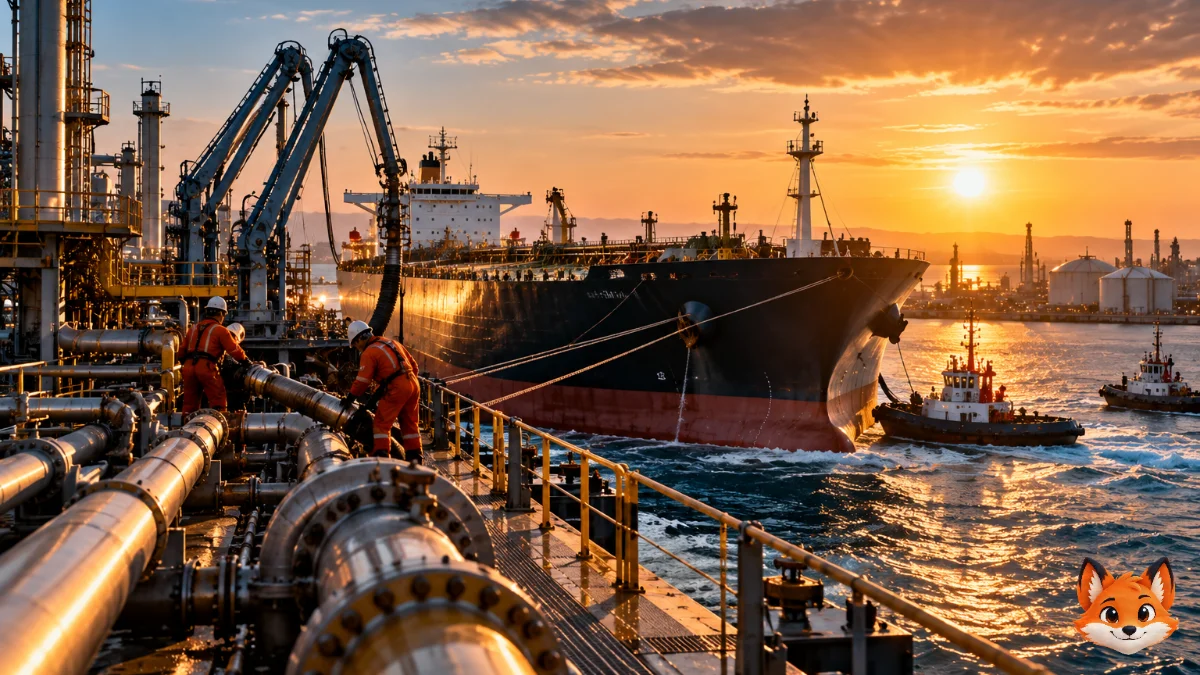 AI image
In short
- Brent crude closed at $116.72 a barrel on 23 October 2026, its highest settlement since April.
- Producers may benefit from higher selling prices, while refiners and transport companies also face rising costs.
- Oil prices reflect supply disruptions and geopolitical risks, but production policy and transport costs also shape the market.
- Pump prices include refining, distribution and taxes as well as the cost of crude oil.
On Friday 23 October 2026, Brent crude settled at $116.72 a barrel. That was 3.14 percent higher than the previous day and its highest settlement since 29 April. Tensions around Saudi Arabia, attacks on shipping and concerns about supply pushed prices higher. Who benefits, and why does the motorist often feel the cost first?
Oil prices rise when supply becomes uncertain
Oil is traded around the world. Its price responds not only to how much oil is available, but also to what traders expect to happen next. When tankers come under attack or important shipping routes become more dangerous, buyers anticipate delays and shortages. They may then pay more for oil that can be delivered quickly.
The US Energy Information Administration described how Brent crude began July 2026 at around $72 a barrel. After renewed military attacks in the Middle East, prices climbed further. On 23 October, Brent settled at $116.72. That is about 62 percent above its early July level.
One important route is the Strait of Hormuz, through which large volumes of oil from the Gulf region travel. If traffic is disrupted, buyers must account for detours, delays and higher insurance costs. Even if global production does not stop entirely, the price can rise.
Producers may gain, but not every oil company gains equally
Higher oil prices help producers when they can sell oil for more without seeing their own costs rise at the same pace. This can increase revenue and profit. The impact varies because some companies produce oil cheaply, while others operate expensive fields.
The amount a company can actually deliver also matters. A producer that loses access to damaged infrastructure does not automatically benefit from a higher market price. Its selling price may rise, but the volume sold may fall.
What does that mean? Suppose a producer sells 100,000 barrels for $80 a barrel. At $110, the same volume generates an extra $3 million in revenue. That is not an extra $3 million in profit. Taxes, production costs, transport and any disruption still have to be deducted.
Oil producers are also different from refineries. Refineries buy crude and process it into petrol, diesel and other products. If their input costs rise faster than the prices they receive for finished fuels, their margins shrink. A higher oil price therefore does not automatically make every energy company richer.
Shipping and refining add to the bill
Oil must be transported and processed as well as extracted. In October 2026, the International Energy Agency reported that record freight costs and more expensive crude were squeezing refinery margins in Europe and Asia. US refiners benefited from cheaper feedstocks instead.
That difference shows why one oil price does not tell the whole story. A refinery’s location, the quality of the crude it uses and the prices of diesel or petrol all influence how much money it keeps.
Transport companies also feel the impact. Trucks, ships and aircraft need fuel. When fuel becomes more expensive, operating costs rise. Companies may try to pass those costs on to customers, but they cannot always do so immediately or in full. The higher energy bill can eventually show up in the price of groceries, deliveries and travel.
Consumers pay at the pump and in shops
For households, the price at the pump matters more than the international price of a barrel. Between crude oil and petrol come refining, storage, distribution and taxes. In July 2026, the European Central Bank described how changes in oil prices pass through to retail fuel prices within weeks.
Taxes can dampen the percentage change because part of the pump price consists of fixed charges. But consumers are not protected from higher prices. Diesel can also become more expensive than the crude price alone would suggest when refineries or inventories come under pressure.
In numbers: You buy 50 litres of fuel and the price rises from €1.70 to €1.90 per litre. Your bill goes from €85 to €95. That is €10 extra each time you fill up. At four fill ups per month, the difference reaches €40.
The impact does not stop at the petrol station. Hauliers pay more for diesel, manufacturers pay more for energy, and farmers face higher transport costs and costs for some inputs. If businesses pass those costs on, households have less money for other spending. A geopolitical conflict can therefore affect people who use very little oil directly.
Old prices do not return automatically
A lower oil price does not mean petrol and diesel will immediately return to their levels from three years ago. Pump prices also depend on taxes, refining margins, distribution costs and the exchange rate between the dollar and the euro. Stocks may also have been bought at higher prices.
Prices can fall when supply recovers, tensions ease or demand weakens. In October 2026, the International Energy Agency expected global oil demand to fall by 2.5 million barrels a day year on year in the fourth quarter. High fuel prices also reduce consumption.
Yet disruptions can keep the market tight. The agency reported that global observed oil inventories at the end of September 2026 were about 509 million barrels below their level at the end of February. Low inventories make it harder to absorb another interruption. Lower prices therefore require not only less tension, but also enough supply and a recovery in logistics.
High prices do not automatically prove manipulation
Oil producers and exporting countries have a financial interest in oil revenues. Some countries coordinate production policy with other producers. These decisions influence how much oil reaches the market and can support prices when demand remains unchanged.
That is different from proving that prices are being artificially kept high. The October 2026 price rise coincided with reported attacks on energy infrastructure, shipping risks and higher transport costs. These are concrete factors that can affect the market.
To judge whether a price move mainly reflects policy or disruption, production data, inventories, transport costs and demand need to be considered together. It is also necessary to distinguish a producer delivering less oil, a trader pricing in risk and a refinery passing on higher costs. Without that evidence, a firm accusation is not supported.
Questions to ask before drawing conclusions
- Is the price rising because supply has actually been interrupted, because traders fear an interruption, or both?
- Which producers can raise their selling prices without losing production or transport capacity?
- Are pump prices rising as quickly as crude prices, and how are refining margins changing?
- How much of the final fuel price comes from taxes and distribution costs?
- Is there production and inventory data to support a claim that prices are being kept artificially high?
This article is for educational purposes only and is not financial advice.
Sources
- Reuters, Oil prices jump $3 on Houthi attacks, oil spill, highest settlement since April, 23 October 2026
- US Energy Information Administration, Crude oil prices and refinery margins generally increased throughout the third quarter, 5 October 2026
- International Energy Agency, Oil Market Report October 2026, 14 October 2026
- European Central Bank, From well to pump: how fuel prices are formed, 31 July 2026
- European Commission, Weekly Oil Bulletin