Open a bank account anonymously: is it still possible?
 AI image
In short
- Fully anonymous accounts at regulated banks are virtually impossible.
- DAC8 concerns crypto reporting, while CRS covers international account information exchange.
- Countries outside the EU may still exchange financial information with Spain.
- Georgia offers interesting options for foreign account applicants.
- A foreign account does not automatically mean more privacy or fewer tax obligations.
Open a bank account anonymously: is it still possible?
Opening a bank account without endless questions, extensive paperwork or the feeling that every financial step is being monitored sounds increasingly attractive. But is there still a country where you can open an account relatively easily and retain more control over your financial privacy? We investigated foreign banks, international information exchange and the effects of DAC8, MiCA and CRS. The result: banking outside Europe is still possible, but fully anonymous banking at regulated banks has almost disappeared.
Opening a bank account is becoming more complicated
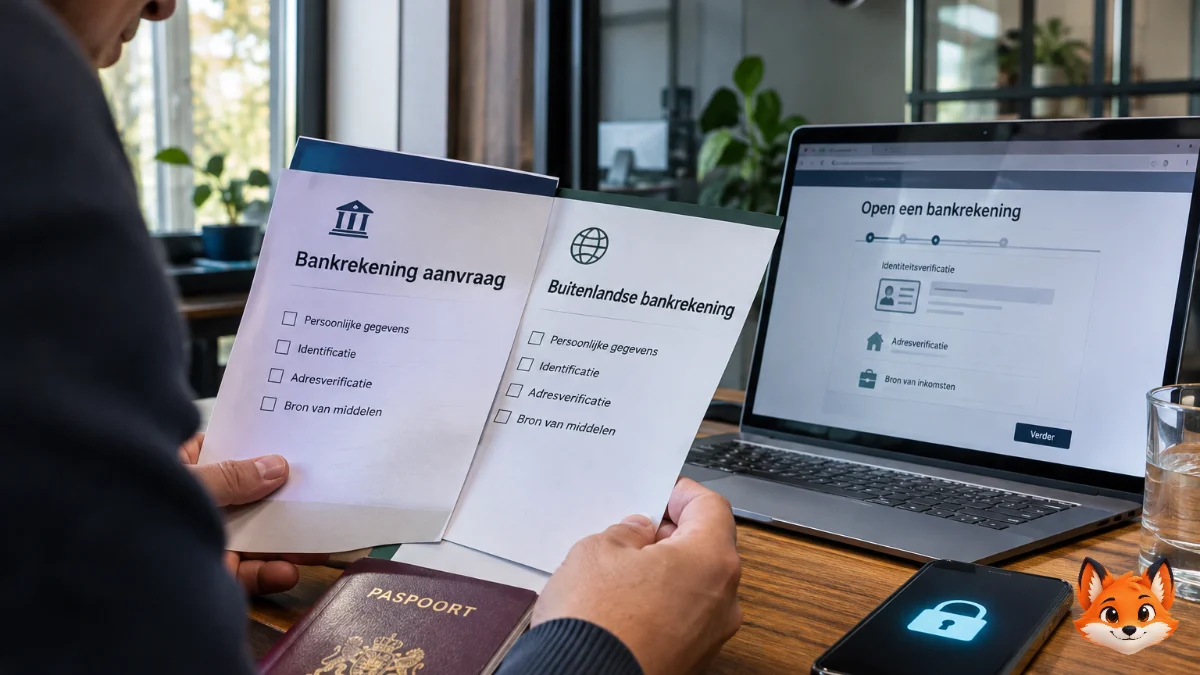
Anyone opening an account today may face more questions than simply providing a name and address.
Banks want to know where you live, what you do for a living, where your income comes from and why you want the account. For larger amounts, they may request payslips, tax returns, sale documents or proof of wealth.
There is a legal reason for this. Banks must identify customers, prevent money laundering and check whether transactions fit the customer's profile.
Still, the growing number of checks raises questions. How much information does a bank really need to collect? Who can access that information? And can you still choose a bank that does not ask additional questions about every financial activity?
This debate is not only about tax. It also concerns privacy, data security and the relationship between citizens, banks and governments.
Anyone looking for a foreign account should distinguish between three different areas: rules for ordinary bank accounts, international exchange of financial information and European rules for crypto.
DAC8, MiCA and CRS: three different frameworks
These terms are often mixed together online. However, each has a different purpose.
DAC8: more information about crypto
DAC8 is a European directive expanding the automatic exchange of information about crypto assets.
From January 1, 2026, reporting crypto service providers must collect information about relevant transactions by customers living in the EU. The first reporting period covering 2026 will be exchanged in 2027.
This can include customer details, tax residence, tax identification numbers and information about certain crypto purchases, sales and transfers.
DAC8 is not simply a European law that makes every ordinary bank account visible. It focuses on reporting crypto service providers and information about crypto activity.
Source: European Commission on DAC8.
MiCA: rules for crypto service providers
MiCA stands for Markets in Crypto Assets Regulation. This European regulation covers the authorisation, supervision and obligations of crypto service providers, among other matters.
MiCA is not a general law for ordinary payment or savings accounts. A bank offering only traditional banking services does not automatically fall under MiCA simply because it is a bank.
A financial institution that also offers crypto services may fall under the European rules for those activities.
Source: ESMA on MiCA.
CRS: international exchange of banking information
For anyone considering a foreign bank account, CRS is at least as important.
CRS stands for Common Reporting Standard. It was developed by the OECD and allows participating countries to automatically exchange certain financial account information.
A bank may ask for your tax residence and tax identification number. If you are tax resident in Spain and open an account with a bank in a country that exchanges relevant information with Spain, certain account details may reach the Spanish tax authorities through the local tax authority.
This information may include:
- Name and address of the account holder.
- Tax residence and tax identification number.
- Account number.
- Name of the financial institution.
- Account balance or value at the end of the year.
- Certain income, such as interest and dividends.
CRS does not mean that the tax authorities can monitor every payment live. It is not a system that automatically forwards every card payment or bank transfer individually.
But an account outside the EU is not automatically invisible.
The OECD publishes current international agreements and the countries that exchange financial information with one another.
Source: OECD overview of CRS exchange relationships.
Banking outside the EU: five options examined
We reviewed five destinations frequently mentioned as alternatives to European banks. The comparison focuses on access for foreign customers, practical options and international information exchange.
The assessment is not a guarantee that a bank will accept every application. Banks can impose additional requirements based on nationality, residence, income, source of wealth and the purpose of the account.
1. TBC Bank in Georgia
Interesting for foreign account applicants
Georgia is one of the countries often mentioned by people looking for a bank outside the European Union. TBC Bank is a major Georgian bank and has a separate registration process for non residents.
Its official registration page allows applicants to start the process using a valid passport. Additional documents may be requested. According to the bank, the process can be completed at a branch or through video onboarding.
This makes TBC an interesting option for people who want to bank outside Europe without immediately going through a complex private banking process.
Advantages
- Separate application process for foreign customers.
- Application can be started online.
- Video onboarding is available.
- Accounts and services in different currencies.
- Georgia is outside the European Union.
Disadvantages
- Account opening is not guaranteed.
- Additional documents may be required.
- The bank may ask about income and source of wealth.
- Georgia participates in international CRS information exchange.
- Currency risk when holding Georgian lari.
One important detail: some websites still describe Georgia as a country outside CRS. That is not a reliable description of the current situation. Georgia appears in international lists of participating jurisdictions.
Our assessment: TBC Bank is one of the more interesting options to investigate if you want an account outside the EU. Its application process is relatively accessible, but the account is not anonymous and the bank can still conduct customer checks.
Official information: TBC Bank for foreign customers.
2. Bank of Georgia
Another major bank in Georgia
Bank of Georgia is another major player in the Georgian market. It offers personal accounts, digital banking and various financial products.
The bank may be interesting for foreign customers, but it is important to check whether you qualify as a non resident before applying. Requirements can differ depending on nationality, residence and customer profile.
We could not find a general official guarantee that every foreign applicant can open an account using only a passport.
Advantages
- Large established bank.
- Modern digital banking services.
- Different financial products and currencies.
- Outside the direct application of EU rules such as DAC8 and MiCA to ordinary local banking services.
Disadvantages
- Acceptance of foreign customers is not guaranteed.
- Additional documentation may be required.
- Georgia participates in CRS.
- A branch visit may be necessary.
Our assessment: an interesting second option in Georgia. Ask the bank in writing about the requirements for someone who is tax resident in Spain.
Official website: Bank of Georgia.
3. Switzerland
Strong banking sector, but no secret banking
Switzerland has a long history as an international financial centre. It is known for its banking sector, the Swiss franc and extensive services for international customers.
However, the reputation of Switzerland as a country where foreign assets remain completely invisible to other governments is outdated.
Switzerland participates in CRS. Financial institutions can therefore exchange certain account information with participating countries.
Swiss banks must also identify customers and may ask questions about the source of money and wealth.
Advantages
- Established international banking sector.
- Strong financial infrastructure.
- Swiss franc as an alternative currency.
- Interesting for international wealth diversification.
- Clear supervisory framework.
Disadvantages
- Not anonymous.
- Strict identification and customer checks.
- Foreign customers may face additional requirements.
- Possible minimum wealth requirements.
- Costs may be higher than at ordinary payment banks.
- CRS information exchange.
Our assessment: Switzerland may be interesting for people who want to diversify their wealth internationally. Anyone mainly looking for a simple account without questions will not automatically find that here.
Source: Swiss Banking.
4. United Arab Emirates
Dubai and Abu Dhabi as international financial centres
The United Arab Emirates have developed into an important international financial market. The region has major banks, international payment options and services for individuals and companies.
However, opening an account as a foreign customer is not guaranteed. For many standard banking products, residency in the Emirates is important. Options for non residents may be more limited.
The idea that the Emirates are outside international information exchange is also incorrect. The country participates in CRS.
Advantages
- International financial centre.
- Different currencies and international payment options.
- Interesting for people who genuinely live or do business in the region.
- Outside the European Union.
Disadvantages
- Opening an account without local residency can be difficult.
- Additional documents may be requested.
- Source of wealth checks.
- International information exchange under CRS.
- Possible minimum balance requirements and higher fees.
Our assessment: the Emirates may be interesting for people with genuine business or personal connections to the region. If you simply want a second account while living in Spain, this is not necessarily the easiest route.
Source: UAE Ministry of Finance on CRS and FATCA.
5. Jersey
Its own financial system, but no anonymity
Jersey is not part of the European Union and has its own legal and financial system. The island has an established financial sector with banks and wealth managers serving international customers.
That does not mean every foreign individual can easily open a current account there. Requirements differ between banks and products. Identification, proof of address and information about income and tax residence may be requested.
Jersey also participates in CRS. The island includes Spain in its list of participating jurisdictions.
Advantages
- Established international financial centre.
- Its own legal and financial system.
- Experience with international customers.
- Wealth management options.
Disadvantages
- Non residents do not automatically qualify for ordinary current accounts.
- Extensive documentation may be required.
- Not anonymous.
- CRS information exchange with Spain.
Our assessment: Jersey is more likely to interest people with international wealth arrangements than someone who simply wants a second bank account.
Sources: Government of Jersey on opening accounts and Jersey on CRS.
Comparison: which bank comes out on top?
| Bank or destination | Outside EU | Access for non residents | CRS |
|---|---|---|---|
| TBC Bank, Georgia | Yes | Application process available | Yes |
| Bank of Georgia | Yes | Confirm in advance | Yes |
| Switzerland | Yes | Depends on bank and profile | Yes |
| UAE banks | Yes | Often limited | Yes |
| Jersey | Yes | Depends on bank and profile | Yes |
The most interesting option for a relatively accessible application is TBC Bank in Georgia. This is not a judgement about the privacy offered by the bank. It only means that the bank publishes an application process for foreign customers.
For all five destinations, opening an account remains subject to the bank's individual assessment.
Are there still countries outside CRS?
This is probably the most important question for people specifically looking for greater financial privacy.
Some countries do not participate in the full CRS system or do not have the same automatic exchange relationship with every country.
But that does not mean an account there is anonymous or that a foreign tax authority can never receive information.
There are several ways information may become available. These include international tax treaties, information requests, local legislation and other agreements between countries.
Banks can also apply stricter checks than the legal minimum. A country outside CRS does not automatically mean that a bank will not identify its customers or ask questions.
A bank that does not make automatic CRS reports may still be legally required to provide information when there is a valid legal basis.
That is why choosing an account based on old lists of so called secret banking countries is unwise.
What does this mean for Dutch nationals living in Spain?
For Dutch nationals who have moved to Spain, tax residence is an important consideration.
Anyone who is tax resident in Spain must generally consider Spanish tax rules covering worldwide income and assets.
Opening an account in Georgia, Switzerland or Dubai does not change your tax residence.
If a foreign bank exchanges information with Spain, the Spanish tax authorities may receive information about the account. There may also be reporting obligations for foreign assets.
One well known example is Modelo 720. Specific conditions and thresholds apply. Not every foreign bank account automatically creates a reporting obligation.
It is also important to understand that the absence of automatic information exchange does not remove a reporting obligation that may otherwise apply.
A foreign bank account can still be useful for international payments, diversification or holding different currencies. But it should not be used to hide assets or income from tax obligations.
How can you protect your financial privacy?
Complete anonymity is almost impossible at regulated banks. That does not mean you have no influence over how your information is protected.
When choosing a bank, consider the following:
1. Read the privacy policy
Check what personal information the bank collects, why it uses it and with whom it shares it.
2. Choose a bank with clear conditions
A bank should be able to explain when it requests additional information and the legal basis for sharing data.
3. Do not use more services than necessary
Your current account, savings account and investment account do not all have to be with the same provider. Diversification can be practical, provided you keep proper records and meet your obligations.
4. Check security
Two step login verification, transaction notifications and clear fraud procedures are more important than attractive promises about privacy.
5. Ask about requirements in advance
Before travelling to a foreign bank, ask in writing which documents are required, whether non residents are accepted and what fees apply.
Conclusion: anonymous banking is almost gone, but choice remains
Anyone who wants to open a bank account without unnecessary complications still has options. TBC Bank in Georgia stands out because of its public application process for foreign customers. Bank of Georgia may also be interesting, although its requirements should be checked in advance.
Switzerland, the United Arab Emirates and Jersey each have their own advantages, but they are not automatically easier or more privacy friendly.
The main lesson from this research is that banking outside the EU is not the same as being outside international information exchange.
DAC8 concerns crypto activity, MiCA regulates the European crypto market and CRS enables the automatic exchange of certain financial account information.
These are different systems with different purposes.
Governments see international information exchange as a tool against tax evasion and money laundering. At the same time, citizens can reasonably ask how far financial monitoring should go and what protection their personal data receives.
Perhaps the question is not only where you can still open a bank account.
It is also how much financial privacy citizens can expect in an increasingly digital society.
This article is journalistic research and general information. It is not legal, tax or financial advice. Banking conditions, eligibility requirements and international information exchange can change. Always check current requirements with the bank and seek professional advice about your personal circumstances.
Sources and further information
- European Commission: DAC8
- ESMA: MiCA regulation
- OECD: Current CRS exchange relationships
- TBC Bank: Application for foreign customers
- Bank of Georgia: Official website
- Swiss Banking: Information for bank customers
- UAE Ministry of Finance: CRS and FATCA
- Government of Jersey: Opening a bank account
- Government of Jersey: Common Reporting Standard