Europe wants fewer rules but more power in Brussels
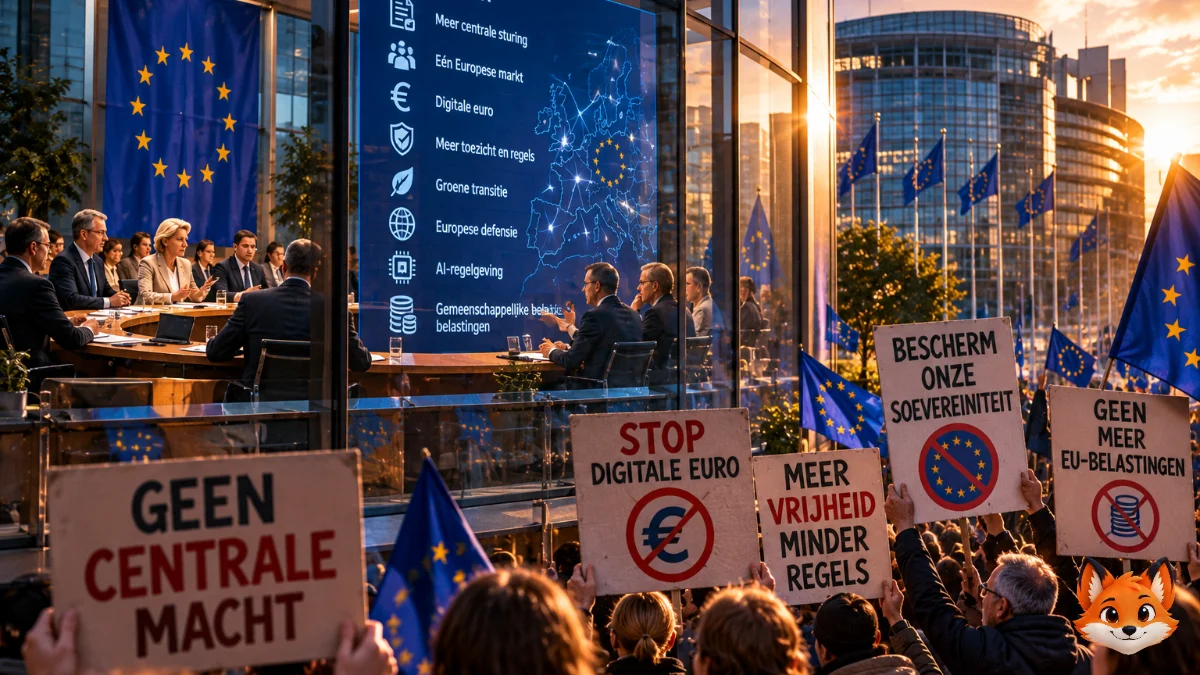 AI image
In short
- The European Commission aims to cut administrative burdens by at least 25 percent for businesses and 35 percent for small and medium sized firms.
- The EU is also working to integrate markets, supervision and regulation across its 27 member states.
- European cooperation can solve shared problems, but decisions made farther from voters can be harder to challenge.
- The key question is whether Brussels receives powers needed for cooperation or powers that should remain national.
On October 16, 2026, the European Council called for deeper integration of the single market and simpler European rules. The message sounds attractive: less paperwork, lower costs and a stronger European economy. But there is a tension in those plans. While Brussels promises to remove rules, it also wants to bring the European market closer together and strengthen shared governance.
That raises a fundamental question. When is European cooperation useful, and when does too much power move away from national voters to institutions at a distance?
Brussels promises fewer rules while building more European control
The European Commission aims to reduce administrative burdens by at least 25 percent for all businesses. For small and medium sized enterprises, the target is 35 percent. The Commission aims to save €37.5 billion in recurring administrative costs by the end of 2029.
That sounds positive. An entrepreneur who spends less time on forms, reports and permits has more time to run a business. But less paperwork does not automatically mean less central power.
The European Council also wants faster progress towards a more integrated single market, shared supervision rules and European legislation for businesses and industry. The Commission says these measures are needed to make Europe more competitive and less dependent on other countries.
The real issue is who sets the rules. If 27 countries share one market, common rules can make sense. But the more policy is set at European level, the less room national parliaments have to make their own choices.
The Commission sees centralisation as a response to an uncertain world
The European Commission has a clear argument for more cooperation: European countries are individually vulnerable when dealing with the United States, China and other major powers. A shared market, common investment and coordinated policy give Europe greater weight.
That is not an imaginary problem. European companies face national barriers and sometimes struggle to scale across a market made up of 27 countries. Energy, defence and digital infrastructure also cross national borders.
But a good reason for cooperation is not a blank cheque for ever more central decision making.
The question is whether every issue really needs to be decided at European level. A cross border problem often requires cooperation. An issue that mainly affects local communities calls for room for national or regional choices.
What does that mean? The subsidiarity principle in the European treaties says that the EU should act only when an objective can be achieved better at European level than by individual countries. It is an important limit on European power. The question is how strictly that limit is applied in practice.
Democracy becomes more fragile when decisions move farther from voters
In a democracy, citizens can vote their leaders out. European decision making is more complicated than a national election. The European Commission proposes many laws, the European Parliament and member states negotiate them, and national governments implement the rules.
The system has democratic structures, but many citizens find it difficult to see who is responsible for a particular decision. When a policy fails, each institution can point to another part of the process.
That is the risk of concentrated power. It does not mean Brussels is automatically undemocratic. It means accountability can become less visible as more decisions pass through several layers of government.
The European treaties limit EU powers. But much depends on how existing powers are interpreted, which new proposals are adopted and how much room member states retain when implementing them.
Every new European power should therefore come with concrete questions: who checks the decision maker, how can a citizen appeal and who can reverse the policy?
European plans also affect businesses, investors and savings
European rules are not just a political issue. They influence business costs, competition and the choices available to investors.
Suppose a small business spends €10,000 a year on administrative requirements. If the Commission reaches its target of reducing burdens for small businesses by 35 percent, and the full saving applies to that business, it would save €3,500 a year. This is a mathematical example, not a prediction of what any particular business will save.
The other side matters too. New rules can bring extra reporting, system changes and consultancy costs. Large companies can often absorb those costs more easily than small competitors. Rules that appear equal on paper can therefore benefit the largest firms in practice.
In numbers: You invest €5,000 in shares of European companies. Suppose their market value falls by 10 percent because higher compliance costs reduce profits and investor expectations. Your investment would be worth €500 less, leaving €4,500. This is a hypothetical example, not a measured effect of European policy.
Anyone who wants to understand the financial impact of centralisation must look beyond announced savings. Which rules are actually removed, which replace them and who pays the bill?
Deeper integration makes policy harder to reverse
The European Council wants agreement by the end of 2027 on key parts of its agenda for one European market. These include proposals to make it easier for companies to operate across member states and to align rules and supervision.
Supporters expect this to help companies grow and make Europe more competitive with other economic powers. That could benefit workers, consumers and investors.
But integration also makes policies harder to reverse. Once businesses, governments and financial institutions adapt their systems to common European rules, a national change of direction becomes more difficult. A country cannot simply choose a different approach if the relevant power belongs to the EU.
That creates a serious democratic question. European cooperation should solve problems, not mean that every new crisis automatically results in more powers for Brussels. Temporary measures should also have clear end dates and oversight.
Centralisation becomes dangerous when criticism no longer matters
The danger of central power is not just the person in charge today. It is the system that develops when more decisions are made at one level and citizens have fewer ways to influence them.
A European institution can start with good intentions and still create policies that work badly for certain countries or groups. The farther decision making moves from citizens, the more important transparency, parliamentary scrutiny and meaningful appeal become.
That does not mean every European measure is a power grab. It means new powers should face a high standard of proof. The authority asking for more power should explain which problem it will solve, why national solutions are insufficient and how misuse will be prevented.
The same test should apply to national governments. Power close to home is not automatically good, just as power in Brussels is not automatically bad. The difference lies in oversight, limits and the ability to hold leaders accountable.
Citizens should ask the same questions about every new European plan
The European Union needs cooperation on problems that cross borders. But cooperation and centralisation are not the same. One requires common agreements; the other shifts where decisions are made.
These questions are useful for citizens and investors:
- What specific problem does the proposal solve?
- Could a country or region achieve the same objective itself?
- Who supervises the European institution receiving the power?
- Can citizens and national parliaments effectively challenge the decision?
- Is there an end date or a review if the measure fails?
Europe's direction should not be judged only by economic growth or administrative speed. The distance between citizens and decision makers matters too. If Brussels gains more power, oversight must grow at least as much.
This article is educational information and not financial advice.
Sources
- European Council, Conclusions of 15 and 16 October 2026
- European Commission, Simplification of EU rules
- European Commission, Areas of EU action
- European Union, Treaty on European Union, Article 5
- European Commission, One Europe, One Market roadmap
- BitFox, The digital euro and control over your money