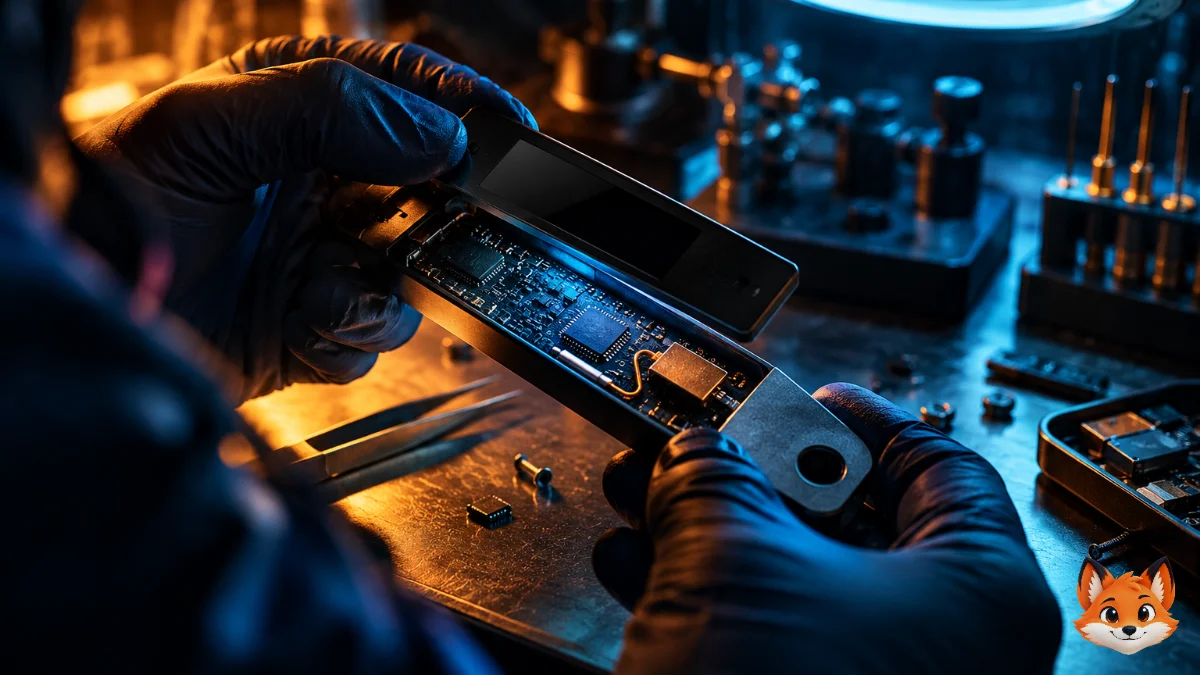
Hardware wallet: keeping your keys yourself, but how?

In short
- You own crypto through a secret key. Whoever has the key has control.
- A hardware wallet keeps that key in a separate device, outside your computer.
- The recovery phrase is everything: lose it or share it, and you lose your crypto.
Crypto does not sit in an app. It sits on a blockchain, and whoever holds a secret key can move it. If you keep crypto at an exchange, the exchange holds that key. If you keep it yourself, you hold it.
What does a hardware wallet do?
A hardware wallet is a small device that stores your key and signs transactions without the key ever leaving the device. Even if your computer is infected, the key can in principle not be stolen. You confirm each payment on the device itself.
The recovery phrase
When you set it up you receive a list of words (usually 12 or 24), the recovery phrase. With it you can get your crypto back if the device breaks. That also means: whoever has that phrase has your crypto.
- Write it on paper or metal, not in a photo or the cloud.
- Never share it with anyone, not even someone who says they are from the manufacturer or support.
- Keep it apart from the device.
What it is not
A hardware wallet does not prevent price losses, nor scams where you approve something yourself. Keeping it yourself also means being responsible yourself: there is no helpdesk that can restore your key. Only buy directly from the manufacturer.
This is an explanation and not product advice or advice to buy crypto.